
United Nations officials now say a Mediterranean tsunami is “100%” certain, but they still cannot guarantee full warning coverage when it hits.
Story Snapshot
- UNESCO tsunami program says there is a 100% chance a wave of at least one meter will strike the Mediterranean within 30–50 years.
- Warning systems exist, but at least one national center admits they only cover earthquake‑driven tsunamis, not landslides or volcanoes.
- UN agencies are rolling out a new 2030 strategy, yet the technical basis for the “100%” claim is not publicly detailed.
- The way global bodies talk about risk highlights why sovereign nations must keep control over real emergency preparedness.
UNESCO’s “100% Chance” Warning And What It Really Means
United Nations Educational, Scientific and Cultural Organization (UNESCO) officials, through their Intergovernmental Oceanographic Commission tsunami program for the North‑Eastern Atlantic and Mediterranean, now state bluntly that there is a “100% chance” of a tsunami at least one meter high hitting the Mediterranean within the next 30 to 50 years. Their own regional page carries that language, turning a long‑term risk into an absolute‑sounding forecast that media outlets have repeated almost word for word.[3][1]
This framing is powerful, but the public documentation released so far does not show the underlying hazard model, assumptions, or confidence intervals behind that “100%” number. The United Nations site gives the headline probability but not the full technical report or peer‑reviewed analysis that produced it, leaving citizens and national leaders to take the rhetoric largely on faith.[3] That mismatch between dramatic language and thin methodological detail should concern anyone who has seen global bodies overstate certainty before.
Warning Architecture: Real Capabilities And Real Gaps
UNESCO describes its tsunami program as a tool that “tackles tsunami risk, bringing together governments, warning systems and coastal communities,” stressing that early warning is central to reducing catastrophic coastal hazards that can cause death and destruction.[7] The organization points to a network of regional centers and national warning services, along with drills and community outreach, as evidence that the system is operational and not just a paper exercise.[7]
On the ground, at least some of that infrastructure is real and 24‑hour. The Hellenic National Tsunami Warning Center in Greece reports that it runs a round‑the‑clock monitoring and alerting service for Greece and the eastern Mediterranean, issuing warning messages after significant seismic events.[5] UNESCO supporters also highlight that the Intergovernmental Oceanographic Commission has issued tsunami alerts within minutes of earthquakes, showing that the network can move quickly when the trigger is clearly detected.[4] Those are meaningful capabilities that can save lives if the next big wave is earthquake‑driven.
Earthquakes, Volcanoes, Landslides: What The System Misses
The same Greek warning center, however, quietly concedes a critical limitation that rarely makes headlines. Its official documentation states that the regional North‑Eastern Atlantic and Mediterranean Tsunami Warning System, and therefore the Greek service, “operate only for tsunamis generated by earthquakes,” while tsunamis caused by landslides or volcanic processes remain outside current operational coverage.[5] That admission matters because UNESCO communications and media summaries often lump earthquake, landslide and volcanic scenarios together when describing Mediterranean hazard.
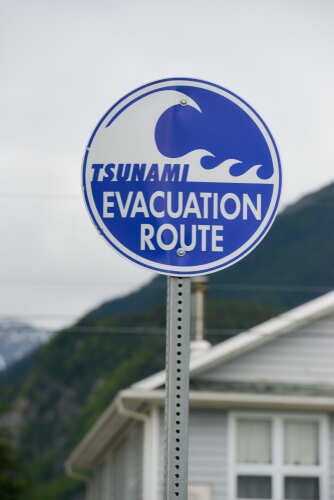
If the widely quoted 100 percent figure folds in volcanic flank collapses or underwater landslides, yet the live warning architecture is blind to those events, then the region is not actually “covered” for the very sources driving the dramatic messaging. That is not a reason to shrug off the risk; it is a reminder that no global announcement can substitute for serious national planning, redundant regional systems and local evacuation routes that assume alarms might be late or incomplete.[3][5]
UN 2030 Strategy And The Politics Of Risk Communication
UNESCO has launched a “2030 Strategy” for the North‑East Atlantic and Mediterranean Tsunami Warning System, promising to strengthen resilience and tie its work to broader United Nations sustainable development agendas.[6] The plan emphasizes getting coastal communities “tsunami‑ready” with evacuation maps, exercises, and constant alerting, echoing the agency’s broader line that early warning and preparedness can blunt even unpredictable disasters.[6] On paper, that sounds like responsible risk management that any prudent government would welcome.
George McInerney finds this interesting 👍 UNESCO warns a tsunami in the Mediterranean is inevitable https://t.co/zX430k745t
— George McInerney (@gmcinerney) May 21, 2026
For many conservative readers, the issue is not whether tsunamis are dangerous, but whether global bodies should be the ones setting the terms of debate, dictating timelines, or using absolutist language that cannot be easily checked. When UNESCO says “100 percent” while providing little technical detail and while key national centers admit major coverage gaps, it underscores why the United States and its allies must retain sovereignty over emergency planning. Good science and strong local infrastructure matter; unaccountable international rhetoric does not.
Sources:
[1] Web – Mediterranean Mega-Tsunami? Experts Say It’s 100% Certain – Surfer
[3] Web – North-Eastern Atlantic and Mediterranean – IOC Tsunami – UNESCO
[4] Web – Wait… UNESCO Does What? The UN’s Surprising Role Leading …
[5] Web – Tsunami Warning Services – HL-NTWC
[6] Web – UNESCO launches strategy for tsunami resilience in the Atlantic and …
[7] Web – Tsunami risk mitigation and early warning systems … – UNESCO