
Trump’s Beijing trip put Taiwan and trade back on the same dangerous table, and that alone explains why markets, allies, and patriots are watching every word.
Quick Take
- President Donald Trump is in Beijing for high-stakes talks that include trade, artificial intelligence, and Taiwan.
- Chinese officials repeated their opposition to United States arms sales to Taiwan before the summit.
- Chinese state media said Xi Jinping warned that mishandling Taiwan could lead to “clashes and even conflicts.”
- The White House said the talks also covered market access for American businesses and more Chinese investment in United States industries.
Trade Talks Carry Bigger Stakes Than Tariffs
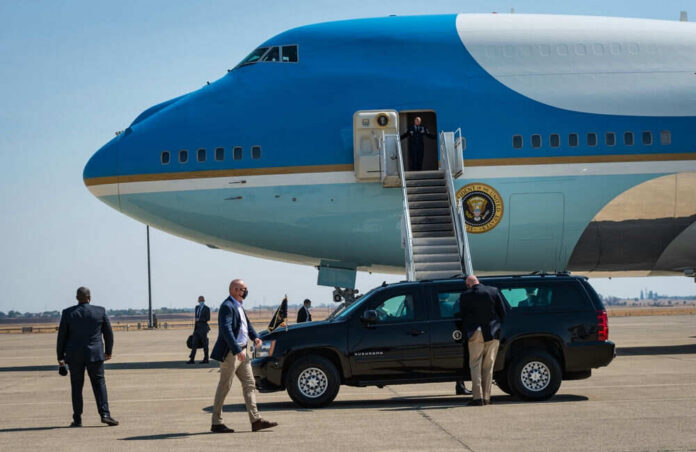
President Donald Trump arrived in Beijing for a state visit that the media has framed as a test of economic leverage and diplomatic discipline [1]. The trip comes as the administration tries to keep pressure on China while also protecting American business interests. Reporting on the summit said the White House discussed expanding market access for American companies in China and increasing Chinese investment in United States industries [3].
The business angle is not accidental. Coverage said several American business leaders joined part of the bilateral meeting, which shows how tightly trade policy and executive-level influence now overlap [3]. Trump also traveled with prominent technology figures, including Nvidia chief executive Jensen Huang and Tesla chief executive Elon Musk, underscoring how the administration is linking national power, artificial intelligence, and industrial strategy. For conservative readers tired of weak globalism, that is a reminder that economic power still matters.
Taiwan Remains the Red Line Beijing Keeps Pushing
Taiwan remained the most serious geopolitical issue hanging over the visit. Fox News reported that China reiterated its opposition to United States arms sales to Taiwan ahead of Trump’s arrival, and that Taiwan was expected to be a key topic in the meetings [1]. That is not a side note. Beijing continues to treat Taiwan as a core national issue, while Washington must decide whether it will back away from long-standing support or stand firm against Chinese pressure.
Chinese state media added more heat to the summit by relaying Xi Jinping’s warning that if Taiwan is not handled properly, the result could be “clashes and even conflicts” [3]. CBS News also reported that the agenda included Taiwan alongside trade, artificial intelligence, and regional security [2]. That matters because it shows the administration is not dealing with a simple trade dispute; it is navigating a direct contest between American strategic interests and Communist China’s demands.
What the Public Record Shows, and What It Does Not
The public reporting does not show a direct on-record Trump commitment on Taiwan during the Beijing summit [1][2][3]. That limits what can be said with certainty about any policy change. The available coverage also does not provide a formal White House readout, signed communiqué, or transcript from the closed-door talks. For that reason, observers should be careful not to read more into the optics than the evidence supports.
Even so, the structure of the visit tells its own story. The administration is trying to preserve leverage with China while keeping trade, technology, and defense issues separate enough to negotiate and connected enough to matter. That is a far more realistic approach than the old elite fantasy that friendly handshakes and corporate photo ops would tame Beijing. The real question now is whether the White House turns summit theater into actual protection for American interests.
Sources:
[1] Web – Trump, Xi make remarks at state banquet on day two of critical China …
[2] Web – Trump wraps up visit with Xi in China tonight, after talks on trade …
[3] Web – China’s Xi warns Trump about “conflicts” if Taiwan isn’t …