

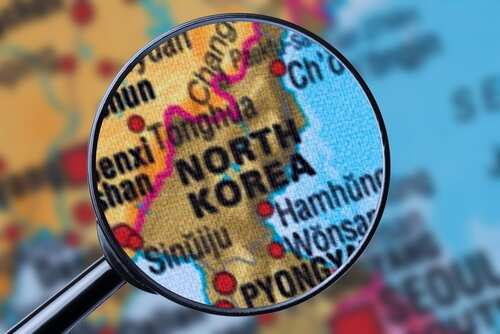
North Korea’s new constitution codifies automatic nuclear retaliation if Kim Jong-un faces decapitation, escalating threats to U.S. allies and demanding President Trump’s unwavering resolve against this rogue regime.[1][4]
Story Highlights
- North Korea amended its constitution in March 2026, granting Kim Jong-un explicit command over nuclear forces via Article 89.[1][3]
- New clauses allow delegation of nuclear use to the National Nuclear Forces Command Organization, interpreted as preparation for crises like leadership attacks.[1][2][3]
- Revisions delete all references to Korean reunification, establishing the ceasefire line as a de facto border and labeling South Korea a hostile state.[1]
- North Korea now declares itself a “responsible nuclear weapons state,” formalizing its arsenal as a deterrent amid rising tensions.[3][4]
- Changes build on 2022 laws authorizing pre-emptive nuclear strikes if leadership is at risk, heightening risks for U.S. forces in the region.[4]
Kim Jong-un’s Nuclear Command Solidified
North Korea’s Supreme People’s Assembly approved constitutional revisions in March 2026, disclosed on May 6. Article 89 states the command authority over nuclear forces lies with the president of the State Affairs Commission, held by Kim Jong-un. This marks the first explicit constitutional mention of his nuclear powers. The changes strengthen Kim’s overall authority, moving his position ahead of the Supreme People’s Assembly in the document’s structure.[1][2]
Kim can now appoint or dismiss key officials and veto laws without parliamentary checks. Parliament’s power to remove the State Affairs Commission chairman was deleted. Analysts view these shifts as consolidating Kim’s control, especially over nuclear decisions, amid perceived threats from the United States and South Korea.[2][3]
Delegation Clause Raises Decapitation Strike Fears
A new clause in Article 89 permits Kim to delegate nuclear use authority to the National Nuclear Forces Command Organization. South Korean intelligence interprets this as enabling responses during Kim’s absences, such as overseas visits, or in decapitation scenarios. This builds on North Korea’s 2022 law outlining pre-emptive strikes if leadership faces imminent threat.[1][4]
The constitution lacks verbatim language for automatic strikes if Kim is killed or incapacitated. However, delegation combined with prior laws suggests a “dead hand” system could trigger retaliation against attackers, including U.S. or South Korean forces. This codifies nuclear response to regime survival threats.[2][3]
Reunification Abandoned, Borders Redrawn
North Korea removed all references to peaceful reunification and national unity from its constitution. Article 9, which called for strengthening the northern regime to unify the fatherland, was deleted following Kim’s January 2024 directive. A new territorial clause sets the inter-Korean ceasefire line as a de facto border.[1]
These changes formalize North Korea as a separate sovereign state, treating South Korea as an adversary. The revisions describe North Korea as a “responsible nuclear weapons state” with forces to repel aggression. This shift ends decades of nominal reunification rhetoric, signaling permanent hostility.[3]
JUST IN: 🇰🇵 North Korea updates constitution to automatically launch nuclear strike if Kim Jong Un is assassinated. pic.twitter.com/upZQZ3su3u
— BRICS info🌿☀️ (@AliwemuG) May 10, 2026
South Korea’s government is conducting a comprehensive review, framing the changes as escalating tensions. The moves align with years of missile tests and rhetoric, raising stability concerns on the peninsula where 28,500 U.S. troops are stationed.[2][3]
Implications for Trump Administration Security
President Trump’s second term faces this nuclear escalation from a regime long defying sanctions and diplomacy. Conservatives have criticized past administrations’ failed engagements, from Clinton’s Agreed Framework to Obama’s strategic patience. These constitutional changes underscore the need for strength, not appeasement.[4]
The “responsible nuclear state” claim echoes defensive rationales in North Korea’s 2013 laws, positioning weapons against U.S. threats. Yet ambiguities, like conditional no-first-use pledges, fuel fears of offensive use. With a new nuclear-capable warship launch, Pyongyang bolsters its arsenal, testing U.S. deterrence.[4]
Trump’s “peace through strength” doctrine must counter this. Robust missile defenses, alliances with South Korea and Japan, and maximum pressure sanctions protect American interests. Weakness invites aggression; resolve preserves liberty and deters globalist failures that empowered Kim.[1]
Sources:
[1] Web – North Korea’s Constitution Grants Kim Nuclear Authority
[2] Web – North Korea adds territorial clause, expands nuclear powers
[3] YouTube – Seoul “reviews” N. Korea’s constitutional revision that increases Kim …
[4] Web – The Enshrinement of Nuclear Statehood in North Korean Law