
A powerful earthquake has rattled southern Philippines, and the immediate fear is not just the shaking but the tsunami threat that followed.
Quick Take
- A magnitude 7.8 quake struck Mindanao in the southern Philippines, according to broadcast reports.[1][2]
- Philippine authorities issued a tsunami warning, with first waves expected between 7:37 a.m. and 9:37 a.m. local time.[1]
- Reports said multiple countries received tsunami alerts, while residents in some areas were told to move to higher ground.[1][2]
- Broadcast coverage described building collapses in General Santos City and power outages in the affected region.[4][2]
Seismic Shock Hits Mindanao
Reports from Reuters-syndicated coverage said a magnitude 7.8 earthquake struck Mindanao in the southern Philippines, triggering an immediate tsunami warning from the country’s seismology agency.[1][2] The first reported wave window was set between 7:37 a.m. and 9:37 a.m. local time, and officials warned that waves could continue for hours.[1] That timing matters because early earthquake alerts often shift as more data comes in.
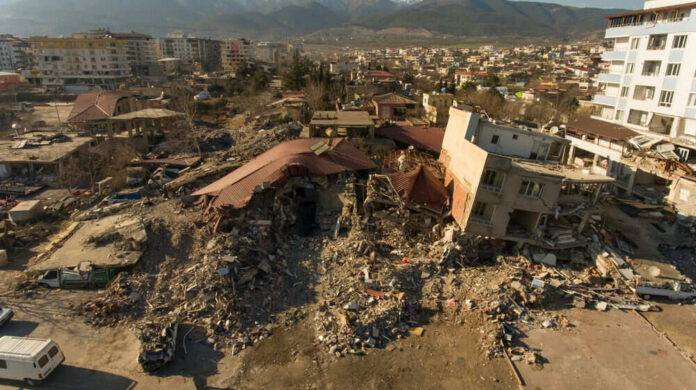
ABC News said the quake also prompted multiple tsunami alerts across several countries and described several aftershocks after the main shock.[4] The same report said video showed multiple buildings collapsing in General Santos City after the quake struck off the coast of Mindanao.[4] Those details point to a serious regional event, but the supplied material is still mostly broadcast transcript content rather than the original agency bulletin.
Tsunami Warnings and Regional Response
According to Reuters-syndicated reporting, the German Research Centre for Geosciences initially pegged the quake at magnitude 8.2 before revising it to 7.8, with a depth of 10 kilometers.[2] That kind of revision is common in the first hours after a major quake, when preliminary instrument readings are still being refined. The same report said the Philippine agency warned of tsunami waves above one meter, while Indonesia also issued warnings.[2]
ABC7 reported that residents were urged to seek higher ground as a precaution and that power outages were reported in the affected region.[2] The outlet also said the quake struck near General Santos City on Mindanao, matching the broader location reported by other broadcasters.[2] For readers watching from the United States, the key point is that the danger was centered on the Philippines and nearby coasts, not California.[2]
Why the Reporting Still Leaves Gaps
The biggest limitation in the available record is the lack of the originating Philippine Institute of Volcanology and Seismology bulletin, along with the full tsunami advisory text.[1][2] Without those primary records, the exact official magnitude, warning polygon, and cancellation time cannot be confirmed from the supplied material alone. That is a problem in any fast-moving disaster story, because broadcast summaries can compress or simplify technical details.
President Bongbong Marcos has directed agencies to immediately coordinate disaster response efforts in light of the destructive magnitude 7.8 earthquake that struck off the coast of Sarangani on Monday, June 8, triggering a tsunami warning in a number of coastal provinces in…
— NewsWatch Plus PH (@newswatchplusph) June 8, 2026
The broader context is sobering: southern Mindanao has faced deadly quake-and-tsunami risk before, including the historic 1976 Mindanao earthquake and tsunami, which remains one of the clearest reminders of how dangerous offshore shaking can be in that region.[3] That history explains why coastal evacuation guidance was so urgent this time. For ordinary families, the practical issue is straightforward: when the ground moves hard in that part of the Pacific, the next warning can come fast.
Sources:
[1] YouTube – 7.8 magnitude earthquake shakes part of southern Philippines
[2] YouTube – BREAKING: Magnitude-7.8 earthquake hits Philippines | ABC NEWS
[3] YouTube – 7.8-magnitude earthquake shakes southern Philippines, tsunami …
[4] Web – 1976 August 16, Mindanao, Philippine earthquake (Ms = 7.8)