
China’s state-backed researchers claim a revolutionary lithium-metal battery breakthrough that could deliver over 620 miles per charge and function in extreme arctic conditions, raising urgent questions about America’s energy independence and technological competitiveness as the communist nation tightens its grip on global battery markets.
Story Snapshot
- Chinese researchers developed hydrofluorocarbon-based electrolyte achieving over 700 Wh/kg energy density, more than double current battery technology
- New battery reportedly functions down to -94°F, addressing cold-weather failures that plague American EV owners in winter months
- Mass production targeted for late 2026 could cement China’s monopoly over 70% of global battery supply chain
- Lab results published in Nature lack independent verification and real-world testing, raising questions about reliability claims
China Doubles Down on Battery Dominance
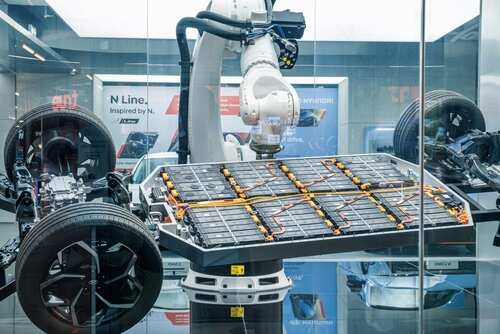
Chinese state-backed research teams from Shanghai Academy of Spaceflight Technology, Nankai University, and Shanghai Institute of Space Power-Sources announced in February 2026 a lithium-metal battery using hydrofluorocarbon electrolytes achieving over 700 watt-hours per kilogram at room temperature. Conventional lithium-ion batteries deliver approximately 250-300 Wh/kg. The researchers replaced oxygen-based electrolytes with fluorine compounds, claiming to enable electric vehicle ranges exceeding 1,000 kilometers or roughly 620 miles per charge. This represents more than double the 500-600 kilometer range typical in current EVs, directly challenging American automakers already struggling against subsidized Chinese competition.
Extreme Cold Performance Claims Raise Eyebrows
Lead researcher Chen Jun from the Chinese Academy of Sciences stated the fluorine-based electrolyte maintains approximately 400 Wh/kg energy density at -50°C (-58°F) and functions down to -70°C (-94°F). Conventional batteries lose roughly 50% capacity below freezing, stranding American drivers in winter conditions from Minnesota to Montana. The Chinese team tested pouch cells mimicking polar and aerospace applications, signaling military and strategic implications beyond civilian transportation. However, researchers acknowledged high-temperature stability issues requiring additional development, and no independent Western laboratories have validated the extreme cold performance claims published in Nature.
Production Timeline and Market Implications
Lu Tianjun, general manager at China Automotive New Energy Battery Technology Company Limited, a unit of state-owned FAW Group, announced plans for mass production by the end of 2026. The company’s variant reportedly achieves 500 Wh/kg with 1,000-kilometer range under China’s optimistic CLTC testing standards, which typically yield 20-30% higher figures than EPA ratings used in America. China already controls approximately 70% of global battery production and 60% of worldwide EV sales. This breakthrough, if commercialized successfully, would further entrench Beijing’s dominance in the $100 billion battery market, leaving American manufacturers like Tesla and QuantumScape scrambling to catch up without the benefit of massive government subsidies.
Verification Concerns and Competitive Response
While the Nature publication lends academic credibility, industry experts noted the absence of pack-level data, real-world road testing, and independent verification from Western institutions. The Chinese testing used CLTC standards rather than EPA protocols, raising questions about actual performance American consumers could expect. Additionally, the researchers acknowledged unresolved high-temperature stability problems requiring modifications to the electrolyte’s boiling point. American companies face mounting pressure as China’s state-directed research apparatus, funded by communist party priorities rather than market forces, continues announcing breakthroughs. The development underscores the urgency of restoring American technological leadership and reducing dependence on adversarial nations for critical energy infrastructure components that power transportation and national security applications.
Sources:
China May Have Quietly Cracked EVs’ Biggest Lithium Problem – Gadget Review
China discovers breakthrough EV battery with 1,000 km range – Electrek
China may have made a breakthrough with solid-state batteries offering 600-mile range – Benzinga
China’s EV battery could double range – Interesting Engineering
Chinese researchers develop semi-solid-state EV battery with 620-mile range – TechRadar