
Putin’s vow of “heavy revenge” after a deadly strike on a Luhansk student dorm risks widening a brutal drone war while facts on civilian targeting remain contested.
Story Snapshot
- Russia says Ukrainian drones hit a student dormitory in Russian-controlled Starobilsk and calls it deliberate [1]
- Moscow demands a United Nations Security Council meeting and opens a terrorism case [1]
- Witness accounts describe a terrifying overnight attack and emergency rescues [2]
- Ukraine denies targeting civilians and claims it struck a military objective; independent verification is lacking [2]
What Moscow Alleges About The Starobilsk Dormitory Strike
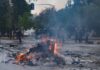
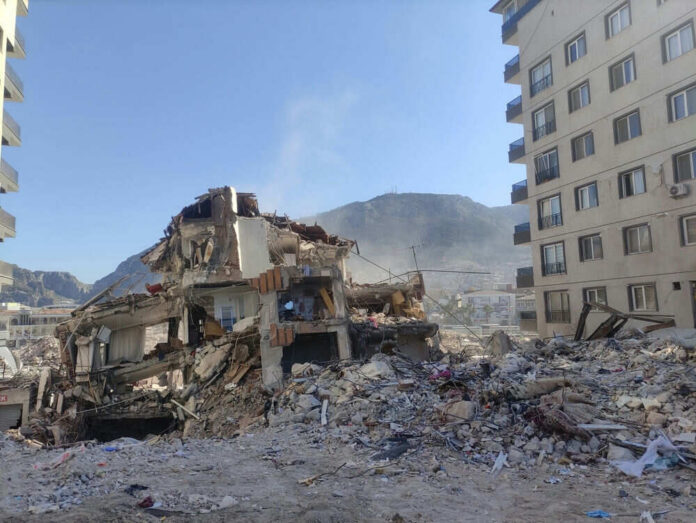
Russian officials said about 10 Ukrainian drones attacked a college complex in Starobilsk, a Russian-controlled part of Luhansk, in the early hours of Friday, striking a student dormitory and causing deaths and injuries [1]. Kremlin spokesman Dmitry Peskov called it a “monstrous crime,” and Russia’s foreign ministry described a deliberate attack against children [1]. Authorities emphasized the absence of nearby military or intelligence facilities and released footage of debris, fire, and rescue efforts to reinforce the civilian-targeting claim [1].
Leonid Pasechnik, a Moscow-backed official, reported that 86 teenagers aged 14 to 18 and one staff member were inside the five-story dormitory when it was hit, while casualty tallies in early reporting varied from at least four to at least six dead and 39 injured [1]. The Russian Investigative Committee opened a terrorism case alleging Ukraine deliberately targeted a civilian educational site [1]. Russia requested an emergency meeting of the United Nations Security Council and framed the incident as an act of terror demanding consequence [1].
On-The-Ground Accounts And What Can Be Verified Now
A resident of Starobilsk described fear and chaos after a deadly overnight strike that hit a student dormitory, saying the blast left them “shaking” as emergency responders worked amid rubble and flames [2]. Visuals released by Russian authorities show intensive rescue activity and significant structural damage, supporting that a populated building took a direct hit [1]. However, independent investigators have not published forensic analysis of munition fragments, strike angles, or satellite-confirmed target mapping to establish intent or precise aim point [1].
Key data points remain unsettled. Casualty figures differ across initial reports, and the occupancy claim—86 teenagers plus one staff member—rests on statements by occupation-aligned officials rather than released dorm logs or sworn testimonies [1]. Assertions that no military facility was nearby have not been matched to public maps or geolocated satellite evidence in available materials [1]. Ukraine’s denial and military-target claim also lack published coordinates, telemetry, or after-action records in the current record [2].
Why Attribution Clarity Matters For U.S. Interests And Stability
Russian President Vladimir Putin said the strike “was not accidental” and ordered forces to prepare retaliatory options, signaling possible escalation if Moscow treats the dormitory as a confirmed civilian target [1]. Wartime information environments often move faster than verification, and contested territory like occupied Luhansk restricts neutral access, which keeps the public dependent on official narratives [1]. Escalation risk rises when retaliation is justified on still-unresolved facts, drawing in global markets, energy prices, and alliance politics.
Russian President Vladimir Putin says a Ukrainian strike on a school dormitory was not accidental and that Russian forces are ready to retaliate. Moscow claims the attack took place in the Russian-controlled Luhansk region.
Al Jazeera’s Yulia Shapovalova reports. pic.twitter.com/36zQO2qRjP
— Al Jazeera English (@AJEnglish) May 22, 2026
Conservatives should demand verifiable evidence before policy shifts or aid decisions intensify conflict exposure. A clear standard protects civilians and restrains mission creep: forensic site reporting, drone-path and radar logs, geolocated satellite imagery, and named witness depositions. Russia’s terrorism case and United Nations appeal assert intentional harm; Ukraine’s denial asserts a military target. Until independent proof emerges, Washington should back rapid, public evidence production while prioritizing American energy independence, border security, and fiscal discipline at home as buffers against foreign-shock ripple effects.
Sources:
[1] YouTube – Putin says Russian forces ready to retaliate after Ukraine strike hits …
[2] YouTube – ‘I Was Shaking, It Was Terrifying’ — Witness Describes Luhansk Strike