

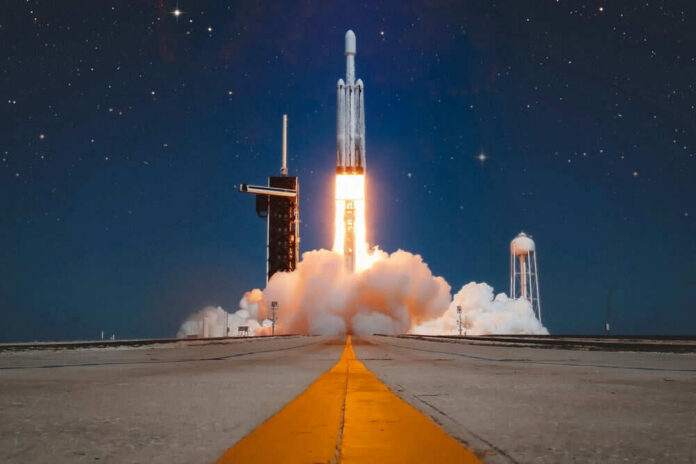
SpaceX’s newest Starship launch showed how much is riding on a vehicle that still has to prove itself under real flight pressure.
Quick Take
- Flight 12 was widely billed as the first launch of Starship V3 from Starbase Pad 2 in South Texas.
- The mission was framed as a major development test, not a routine hop, with payload and reentry objectives.
- Public launch coverage said SpaceX delayed the first attempt after a last-minute technical issue.
- The available record comes mostly from launch listings and livestream coverage, not a full SpaceX technical postflight report.
Starship V3 Gets Its First Major Test
SpaceX planned the twelfth Starship flight test as the debut of the Version 3 vehicle, with liftoff scheduled from Starbase in Texas during a 90-minute window on Thursday evening . Launch listings and livestream pages described the mission as the first flight of Starship V3 and the first flight from Pad 2, which marked a clear step beyond earlier hardware tests [6][4].
Coverage around the launch treated the event as a serious engineering milestone because the flight used new hardware, a new pad, and a new test profile [4]. Sources tied the booster and ship to Booster 19 and Ship 39, while describing the stack as a redesigned vehicle intended to advance Starship’s reuse goals [3][4]. That matters because a program this expensive should be judged on actual capability, not hype.
What the Flight Was Set Up to Demonstrate
Public commentary said the mission plan went well beyond a simple ascent and splashdown. One launch stream description said SpaceX wanted to deploy 20 Starlink simulators and two modified Starlink satellites, then use the upper stage to test heat-shield imaging during reentry [2][3]. Another listing said the vehicle was built to demonstrate major redesigns across the architecture, supporting the idea that Flight 12 was meant to validate new systems in flight [4].
Launch-stream summaries also said SpaceX intentionally stressed thermal-protection hardware by removing one heat-shield tile and painting several others white to test imaging results [1]. Those claims point to a company that is still in development mode, not one that has reached mature operational status. For readers frustrated by wasteful federal programs, the contrast is obvious: private spaceflight moves fast, but it still demands hard proof before anyone should celebrate victory.
Scrub, Retry, and the Limits of the Public Record
SpaceX called off the first launch attempt because of a technical issue just before liftoff, according to launch coverage that tracked the delay in real time [1]. The same report said the next attempt could come on Friday evening, showing how narrow the margin remains on a vehicle this complex [1]. The delay does not erase the significance of the flight, but it does remind observers that a debut is not the same thing as a success.
Elon states that the reason the Starship Flight Twelfth was postponed was because “The hydraulic pin holding the tower arm in place did not retract.”
SpaceX is attempting to fix that issue tonight. If they can fix the problem tonight then another launch attempt will be set for… https://t.co/oQIcFQA17M
— Jose Asenjo (@AsenjoX) May 22, 2026
The broader record in hand is still incomplete. The available sources confirm the launch framing, the hardware identity, and the intended test objectives, but they do not include a SpaceX postflight summary, telemetry package, or regulator report verifying which goals were actually met [2][3][4]. That limitation matters. Americans who care about competence should want results, not just headlines, especially on a program tied to future lunar work and major taxpayer-adjacent ambitions.
Sources:
[1] YouTube – Watch Live 🔴SPACEX LAUNCHES THE FIRST STARSHIP …
[2] YouTube – Watch Live: SpaceX Starship launches on 12th test flight
[3] YouTube – LIVE: SpaceX Starship Flight 12 launch
[4] YouTube – Watch Starship Flight 12 Live – Commentary