
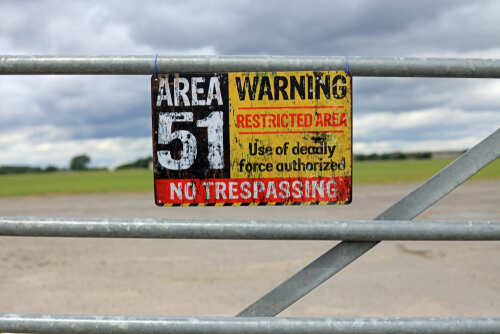
A gunman’s brazen attack on the highly classified Area 51 threatens national security and raises serious questions about military readiness.
Story Highlights
- Shooting at Area 51, one of the U.S.’s most secretive military bases, prompts a lockdown.
- Details about the gunman, including motive and identity, remain under investigation.
- Heightened security and public scrutiny follow the breach.
- Potential implications for national security and base protocol reform.
Unprecedented Breach at Area 51
Area 51, a site synonymous with secrecy and alien lore, was thrust into the spotlight after a gunman breached its perimeter, opening fire. This highly classified U.S. Air Force facility, located in southern Nevada, responded rapidly with a lockdown and emergency protocols. Federal and military authorities are actively investigating the shooter’s identity and motives, with details about any casualties remaining undisclosed. This incident underscores significant vulnerabilities in the security of one of America’s most guarded sites.
Gunman opens fire on secretive Air Force base home to Area 51 https://t.co/rmYfqvkX3T
— John Crump (@crumpyss) September 25, 2025
Area 51’s extreme secrecy and restricted access have long fueled public fascination and conspiracy theories. However, this armed intrusion represents a rare occurrence at such a high-security site. As the investigation unfolds, questions arise about the effectiveness of current security measures and the potential need for reform. The Air Force and FBI have confirmed the incident, promising further updates as the situation develops.
Security Measures and Response
The U.S. Air Force, responsible for Area 51’s operations and security, has heightened its protocols following the attack. The base’s remote location in the Nevada Test and Training Range is typically a deterrent to intruders, yet this breach indicates potential gaps in defense strategies. Security analysts emphasize the challenges of protecting remote, high-value sites, highlighting the need for layered defenses and advanced surveillance technologies to prevent future threats.
In addition to federal agencies, local law enforcement is assisting with perimeter security and the ongoing investigation. As authorities examine surveillance footage and interview witnesses, the potential gunman’s motives—ranging from personal grievances to conspiratorial beliefs—remain a focal point of inquiry. The Air Force’s swift response to the breach illustrates the critical importance of immediate action in safeguarding classified military assets.
Implications for National Security
The armed intrusion at Area 51 has significant implications for national security and military protocol. In the short term, heightened security measures and increased media scrutiny are anticipated. Long-term consequences may involve a comprehensive review and overhaul of security practices at Area 51 and similar installations. This breach may also prompt legislative discussions on improving base security to prevent similar incidents.
The incident has revived public interest in Area 51, sparking debates over transparency and security at secretive military sites. While some experts argue that increased transparency could mitigate public fascination and potential threats, others caution against revealing too much about sensitive operations. As the investigation continues, the balance between security and transparency remains a critical concern for military and government officials.
Sources:
Dreamland Resort: Area 51 history and public records