
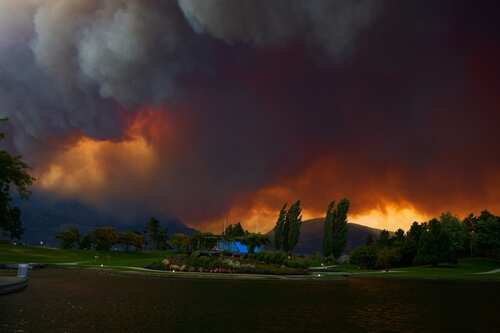
California’s Garnet Fire explodes to over 9,000 acres with zero containment as thunderstorms threaten to spark additional blazes across the Sierra National Forest, putting critical infrastructure and rural communities at severe risk.
Story Overview
- Garnet Fire burns 9,170 acres in Sierra National Forest with no containment since August 24
- 800 firefighters battle flames while protecting PG&E power infrastructure and Balch Camp community
- Thunderstorms and lightning pose immediate threat of new fire ignitions across the region
- Multiple evacuation orders issued as erratic winds and heavy fuel loads accelerate fire spread
Fire Rapidly Expands Despite Massive Response Effort
The Garnet Fire has consumed 9,170 acres in California’s Sierra National Forest since igniting on August 24, 2025, with firefighters achieving zero percent containment despite deploying 800 personnel. California Interagency Incident Management Team 10 leads unified command operations alongside the U.S. Forest Service and Cal Fire. The blaze originated south of Rodgers Ridge near Garnet Dike, approximately 60 miles east of Fresno in terrain known for challenging suppression conditions.
Evacuation orders remain in effect for zones K27, K30, K31, K32-A, and K40, while warnings cover zones K28 and K29. Fresno County officials closed Avocado Lake Park due to fire response operations. The rapid growth from initial ignition to over 9,000 acres demonstrates the extreme fire behavior driven by persistent dry conditions and heavy fuel loads accumulated over recent drought years.
Critical Infrastructure Protection Becomes Priority
Firefighters are prioritizing protection of PG&E power infrastructure and hydroelectric facilities threatened by advancing flames. The utility company maintains critical transmission lines and generation equipment in the fire zone that serve thousands of customers across central California. Past wildfire incidents involving utility infrastructure have resulted in widespread power outages and significant economic disruption, making these defensive operations essential.
The Balch Camp community faces immediate evacuation threat as fire crews establish defensive perimeters around residential areas. This remote region popular for camping and hiking contains the Teakettle Experimental Forest, where decades of ecological research could be lost if flames reach research installations. The combination of recreational infrastructure and scientific facilities adds complexity to resource allocation decisions during suppression efforts.
Weather Conditions Complicate Suppression Strategy
Thunderstorms and associated lightning strikes pose the most significant near-term threat to firefighting operations across the Sierra National Forest. National Weather Service red flag warnings remain active as forecasters predict erratic wind patterns and potential new ignition sources. The same lightning storm system that sparked the Garnet Fire has already triggered multiple smaller blazes across Northern and Central California, stretching response resources thin.
While brief rainfall provided temporary relief, gusty winds and bone-dry vegetation continue challenging containment efforts. Fire behavior analysts emphasize the difficulty of suppressing blazes in remote, fuel-rich terrain under these volatile weather conditions. The 2025 California fire season has already exceeded normal activity levels with thousands of wildfires burning hundreds of thousands of acres statewide, creating unprecedented demand for firefighting resources and equipment.
Sources:
Cal Fire Garnet Fire Incident Updates
Fresno County Garnet Fire Grows to More Than 9,000 Acres in Sierra National Forest
Firefighters Corral California Forest Blaze as Lightning Strikes Bring New Threats
NorCal Lightning Fires August 26, 2025