

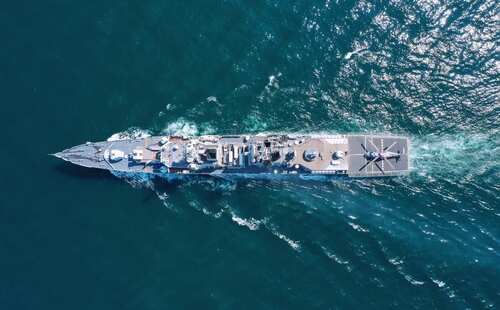
U.S. warships faced fresh Iranian attacks, and Central Command answered with pinpoint strikes it calls lawful self-defense—raising urgent questions about deterrence, maritime security, and keeping American sailors out of harm’s way [1][4].
Story Snapshot
- Central Command says strikes on southern Iran and boats were limited self-defense to protect U.S. forces and shipping [4].
- American destroyers reportedly endured missiles, drones, and small boats amid a fragile ceasefire [1][3].
- Targets allegedly included missile launch sites and boats attempting to lay mines, consistent with maritime protection [4].
- Legal debate centers on necessity and proportionality under self-defense law during ongoing ceasefire talks [8][10].
CENTCOM’s Self-Defense Rationale and Targets
United States Central Command stated that forces conducted self-defense strikes in southern Iran to protect American troops from active threats posed by Iranian forces. Officials said targets included missile launch sites and Iranian boats attempting to emplace naval mines, actions that directly endanger warships and commercial traffic in chokepoints. This narrow target set aligns with defensive interdiction rather than broad punishment strikes. The command framed the operation as timely and necessary to stop imminent or ongoing attacks endangering American personnel [4].
Reports and broadcasts describing the exchange indicate a pattern of Iranian missiles, drones, and small boats challenging U.S. destroyers operating near critical lanes, while the ceasefire remained fragile. Coverage referenced the USS Truxtun, USS Mason, and USS Rafael Peralta facing hostile fire, underscoring why commanders prioritized neutralizing launch sites and mine-laying attempts that could trap ships or spark a wider maritime crisis. The operational picture suggests a focused response calibrated to defend vessels on station and keep sea lanes open [1][3][4].
What We Know vs. What Remains Unclear
Publicly available evidence supports the claim that American destroyers were targeted and that Central Command authorized limited strikes in response. However, the record available to the public does not include released sensor footage or declassified strike logs confirming mine emplacement at the exact moment of engagement. That evidentiary gap is typical early in fast-moving maritime incidents, when militaries hold data pending operational security and after-action reviews. Assertions about intent and timing will sharpen as official assessments are released [1][3][4].
This uncertainty mirrors prior maritime crises where the attacking state invokes self-defense and the targeted state alleges unlawful escalation. Legal analysts generally assess such actions through three tests: whether an armed attack occurred, whether the response was necessary to stop it, and whether the force used was proportionate. Earlier scholarship on maritime self-defense against shore-based threats and anti-ship systems indicates that stopping imminent launches or mine-laying can fit within lawful self-defense if the facts meet those tests [8][10].
Ceasefire Pressure and Maritime Security Stakes
Ceasefire talks already faced strain as both sides probed red lines around the Strait of Hormuz. Coverage emphasized that even a limited salvo—missiles, drones, or fast boats—can force a commander’s hand when seconds separate warning from impact. Central Command’s description of missile sites and mine-laying boats as targets signals a defensive priority: deny Iran the tools that quickly raise costs for American ships and global commerce. Each intercept and strike now carries outsized political weight, even when calibrated to be narrow [2][3][4].
Context from recent legal and strategic analysis underscores why American commanders act preemptively when ships are bracketed by shore-based launchers or suspected mines. Prior writings on self-defense against regional militant threats concluded that protecting warships from ongoing or imminent attacks can justify precision strikes on enabling infrastructure. The same analytical frame applies in the Gulf: commanders must balance restraint with a duty to defend crews, preserve freedom of navigation, and deter further testing by adversaries probing for weak spots [8][10].
Conservative Takeaways: Deterrence, Duty, and Guardrails
Commanders defending American sailors deserve clear rules, decisive authority, and political backing when hostile forces target our ships. The administration’s responsibility is twofold: ensure rapid, proportionate force that restores deterrence, and release declassified evidence as soon as feasible to validate the self-defense narrative at home and abroad. That transparency undercuts propaganda, protects legitimacy, and signals resolve. Iran respects strength and clarity; half-measures or legal ambiguity invite more harassment, risk miscalculation, and threaten energy stability [1][4][8][10].
Moving forward, Congress and the administration should synchronize maritime rules of engagement with measured disclosure of strike justifications. Precision targeting of launch sites and mine-layers protects U.S. lives and global commerce while avoiding open-ended escalation. If Tehran escalates, the United States must retain freedom to neutralize threats swiftly. If Tehran de-escalates, narrowly tailored defenses remain the best guardrails. The compass is simple: protect our sailors, keep sea lanes open, and back our words with facts and strength [1][3][4][8][10].
Sources:
[1] Web – U.S. strikes 2 Iranian ports as American warships come under fire
[2] YouTube – US Conducts Strikes Near Iran as Ceasefire Talks Face Fresh Tension
[3] YouTube – US ‘blew up’ 6 Iranian boats, Iran hits navy ships amid fragile …
[4] YouTube – U.S. strikes Iran in ‘self-defense,’ officials say
[8] Web – Attacks on U.S. Warships Justify Self-Defense Against Houthi Forces …
[10] Web – The Law of Self-Defense and the U.S. and UK Strikes against the …