
Federal agents now have the power to enter Americans’ homes without a warrant in pursuit of deportations—a move reigniting fierce debate over constitutional rights and executive overreach.
Story Snapshot
- Trump’s second-term immigration crackdown eliminates protections for many immigrants, including raids in schools and churches.
- Attorney General’s directive allows law enforcement to enter homes of migrants without warrants, raising constitutional concerns.
- Mass deportations disrupt families and communities, with over 200,000 migrants deported in under six months.
- Executive orders and new laws test limits of presidential power, sparking legal challenges and public outcry.
Trump’s Second-Term Immigration Policies: Sweeping Changes and Immediate Impact
Within hours of his 2025 inauguration, President Trump signed a series of executive orders targeting illegal immigration, including a declaration of national emergency at the southern border and a suspension of almost all refugee admissions. Policies now mandate detention for immigrants charged with or convicted of certain crimes, end the “catch and release” approach, and block asylum seekers from entry. The swift actions directly address long-standing conservative concerns about border security and enforcement, reversing prior policies viewed as lenient and disorderly.
https://www.youtube.com/watch?v=d3sqGcGL4qU
Appointing Tom Homan as border czar, the administration empowered ICE to conduct raids nationwide, notably removing the “sensitive locations” policy. Agents now carry out arrests in places previously considered off-limits, such as schools, churches, and hospitals. This marked departure from the past draws strong support from many conservatives, who saw prior policies as handcuffing law enforcement and encouraging illegal entry. Critics, however, warn that the new approach risks undermining due process and causing collateral damage to families and communities.
Constitutional Questions and Law Enforcement Authority
On March 14, 2025, Attorney General Pam Bondi issued a directive authorizing law enforcement to enter migrants’ homes without warrants—a move that has ignited debate over constitutional protections. Traditionally, the Fourth Amendment requires law enforcement to obtain a warrant before entering a private residence. The administration argues that the new policy is necessary to ensure effective immigration enforcement and restore the rule of law, especially after years of what they describe as “frivolous, unreasonable and vexatious litigation” from attorneys opposing deportations. Legal challenges are quickly mounting, as courts and advocacy groups question whether the actions overstep constitutional boundaries.
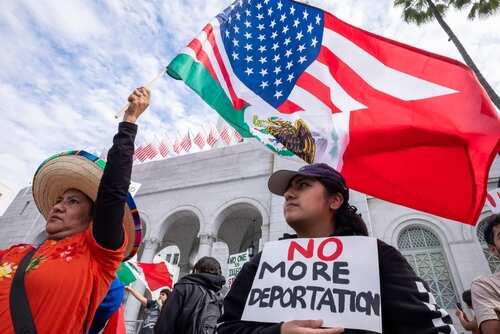
With more than 200,000 migrants deported in the first half of 2025, mass deportations have upended communities and created a climate of fear among immigrant families. Reports indicate that deportees are often transported aboard military aircraft and, in some instances, held in shackles during flights. The administration maintains these measures are essential for national security and the integrity of the immigration system, yet critics argue that due process is frequently sidelined. The elimination of protections for Dreamers and the expansion of expedited removal powers further deepen the divide between supporters and opponents of the policies.
Testing the Limits of Executive Power and the Rule of Law
These sweeping changes have tested the boundaries of presidential authority and sparked a wave of court challenges. Executive and legislative actions now pressure states and localities to cooperate fully with federal immigration enforcement, penalizing those that resist. Critics claim the measures undermine civil liberties, while supporters argue that they finally restore the focus on American sovereignty and border security after years of what they see as globalist, ineffective governance. The ongoing legal battles and public protests underscore the high stakes and deep divisions over the nation’s immigration direction.
https://twitter.com/realDailyWire/status/1756701234567890123
Amid the controversy, conservative advocates argue that these measures represent a long-overdue correction to years of lax enforcement and unchecked migration. They see the administration’s actions as a reaffirmation of national priorities, constitutional order, and the principle that American laws must be respected. As the debate continues, the Trump administration’s aggressive stance on immigration will remain at the center of national discourse, with profound implications for American society and the rule of law.
Sources:
Immigration policy of the second Trump administration – Wikipedia
The Trump Administration’s 2025 Changes to Immigration Law …
Protecting The American People Against Invasion – The White House
The First 100 Days of the Second Trump Administration