
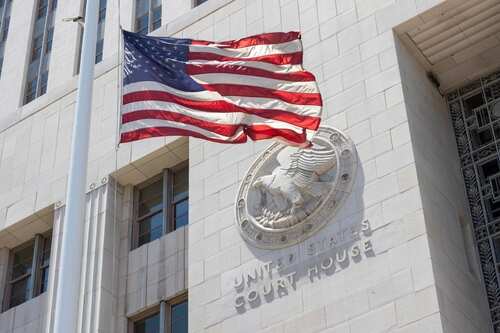
Police found Assistant U.S. Attorney Andrew Haden dead inside a San Diego federal building, and investigators said no foul play is suspected.
Story Highlights
- San Diego police found Andrew Haden, 48, dead in an office at the Edward J. Schwartz federal building after a missing-person report.
- Police said no foul play is suspected while the Medical Examiner determines cause and manner of death.
- The building was formally designated as the Edward J. Schwartz Courthouse and Federal Building by Congress.
- Cause and manner of death often remain “pending” until forensic reviews and toxicology are complete.
What Police Reported About The Discovery
San Diego Police said they received a report of a missing man on Wednesday evening. Hours later, officers went to 880 Front Street, inside the Edward J. Schwartz federal building, and found Assistant U.S. Attorney Andrew Haden dead in an office. Haden was 48 and had twice served as acting U.S. Attorney for the Southern District of California, according to contemporaneous reporting that summarized police statements. Police stated that no foul play is suspected at this time, based on their early review.
Officers treated the location as a secure scene and notified the county Medical Examiner, as is standard in sudden deaths in government facilities. Officials did not release a cause or manner of death. That determination belongs to the Medical Examiner after further review. Early news alerts centered on the lack of suspected foul play. That phrase signals what police think it is not, but it does not answer how or why the death happened.
Where This Happened And Why The Site Matters
The discovery occurred at the Edward J. Schwartz Courthouse and Federal Building in downtown San Diego. Congress formally named the courthouse at 940 Front Street, and the attached federal building, in a 1994 designation act. The General Services Administration’s environmental assessment materials reference the building complex, confirming its federal use and footprint in the civic core. The location underscores the sensitivity of the case, given the public expects strong security, clear procedures, and swift communication when a death occurs in a federal facility.
Federal buildings host courtrooms, offices, and law enforcement workspaces. When an incident occurs inside, agencies follow layered protocols to protect evidence, staff, and the public. Local police often lead the initial response on an unattended death. The county Medical Examiner then completes the medical and forensic review. That split in roles helps keep facts clean and timely. It also avoids rumor by relying on official processes that can stand up in court and in public records.
What “No Foul Play Suspected” Really Means
Medical examiners and coroners treat cause and manner of death as separate decisions. Cause explains the medical reason for death. Manner classifies the circumstances, such as natural, accident, suicide, homicide, or undetermined. When key facts are not yet in, cases are marked “pending” until toxicology, records checks, and investigative steps are complete. That is normal practice, and it avoids guesses that could mislead the public or families.
Former acting U.S. Attorney Andrew Haden, 48, was found dead Wednesday night inside a vacant office at the
Police responded after a missing person report and discovered him at 880 Front St., which houses the U.S. Attorney’s Office for the Southern District of California. No… pic.twitter.com/zEvYUcTQJY
— Gina Beana Fofina (@Ginasassyass) August 22, 2026
Courts and forensic guidance stress careful opinions based on evidence, not rushes to label a case. That is why police can say they do not suspect foul play while the Medical Examiner still withholds a final ruling. It narrows the field without ending the inquiry. For a public servant like Haden, a clear record matters. It protects his family, his colleagues, and the integrity of the justice system he served.
Sources:
feedpress.me, people.com, facebook.com, instagram.com, congress.gov, papers.ssrn.com