
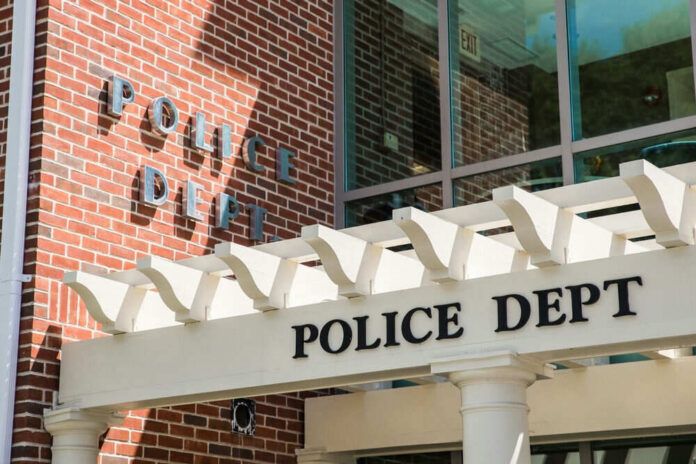
A second-story deck failed under a warrant team in Missouri, and the crash was caught on bodycam.
Story Snapshot
- A high-risk warrant service in Huntsville ended with a sudden deck collapse.
- Seven officers were injured, including four Deputy U.S. Marshals; no life-threatening wounds reported.
- Body camera video shows the fall as the team approached the target apartment.
- Officials described an unexpected structural failure during a lawful operation.
What Happened On That Deck In Huntsville
Law enforcement officers gathered on a second-story deck at an apartment building in Huntsville, Missouri, during a felony warrant operation. As the team moved to contact the suspect, the wooden structure gave way. Several officers crashed through the decking and joists to the ground below. Local coverage, citing the United States Marshals Service and the Randolph County Sheriff’s Office, reported seven injured, including four Deputy United States Marshals, with no life-threatening injuries. Bodycam video released later shows the split-second drop.
Randolph County’s statement described a high-risk warrant at 402 Vaunita Street, with a task force of Deputy United States Marshals and county deputies executing the plan. The collapse occurred during approach, not after any gunfire or use of force. That distinction matters. Most dangers in these operations come from people. This time, the threat was dead wood and gravity. Officials said the hurt officers were treated, and recovery was underway.
Why The Team Was There, And How Risk Stacks Up
Officials targeted a convicted sex offender for arrest on a warrant tied to registration violations, according to reports that accompanied the video release. Fugitive and warrant teams train for armed suspects, crossfire, and ambush. They do not control the buildings they enter. The United States Marshals Service has documented that structure operations carry real injury risks, even without gunfire, because stairs, porches, and balconies are unknown until contact. The Huntsville fall fits that pattern of environmental hazards rather than tactical mistakes.
Critics sometimes ask why officers mass on a porch or deck. Teams cluster to control doors, angles, and lines of fire. They also need hands on shields, breaching tools, radios, and cuffs. Spreading out can lower load on a structure, but it can also hand control back to a suspect who might bolt or arm up. Common sense says balance speed, safety, and structural caution. The facts here show a lawful approach that met a hidden failure point, not a reckless stunt.
The Video And What It Shows (And Does Not)
The body camera clip captures the approach, the creak, and an instant of collapse. You see officers vanish as the deck plane drops. You hear shouts and wood snapping. You do not see warning rot, a weight limit sign, or a posted hazard. Video strengthens the basic report: the deck failed under normal movement and standard approach spacing during a warrant service. One clear lesson stands out for teams and landlords alike: if a deck cannot carry nine adults in work gear, it is a trap door waiting for a footfall.
WATCH: Deck collapse underneath US Marshals as the task force serves a warrant during a Missouri raid.
The Marshals were targeting a convicted sex offender wanted for failing to register as part of Operation Adam’s Watch
Credit @FoxNews pic.twitter.com/RRb3v3NM8a
— Video Forensics (@Video_Forensics) August 20, 2026
Local outlets added post-incident details. They reported the injury count, identified the mix of federal and county personnel, and stated that none of the injuries were life-threatening. That aligns with what the clip suggests: a fall from a second story with broken planks absorbing part of the drop. The sheriff’s office labeled the operation “high-risk,” which matches the suspect profile and standard policy when prior convictions and noncompliance appear in the file.
Accountability, Property, And The Conservative Test
The law treats damage during lawful police work differently than regular property claims. Courts have often ruled that necessary damage in the course of an operation is not a “taking” that the government must pay under the Constitution. That framework aims to keep officers decisive under threat, and it respects the duty to enforce warrants without fear of automatic civil payouts for every broken hinge or busted door. That said, structural negligence by property owners is a separate matter in civil law.
From a conservative view, the core values are clear: back the badge, demand competence, and expect personal responsibility. These officers showed up to enforce the law against a convicted offender. The hazard came from a failed structure, not from heavy-handed tactics. Support for law enforcement and common sense both point to the same takeaway: keep training sharp on approach techniques, add quick structural checks where possible, and hold property stewards to basic safety standards. The rule of law depends on both brave officers and sound buildings.
Sources:
facebook.com, abc17news.com, youtube.com, reddit.com