

California’s billionaire-tax fight is no longer just a state ballot battle; its backers are now selling it as a national model while the state’s richest people look for the exits.
Quick Take
- Governor Gavin Newsom is pushing a national billionaire tax while California fights its own version.
- The California measure would impose a one-time 5 percent tax on billionaire wealth tied to January 1, 2026 residency rules.
- Supporters say the money would fund health care, education, and food assistance.
- Opponents warn the tax could drive away capital, hurt jobs, and reduce long-term revenue.
Newsom Turns a California Tax Fight Into a National Message
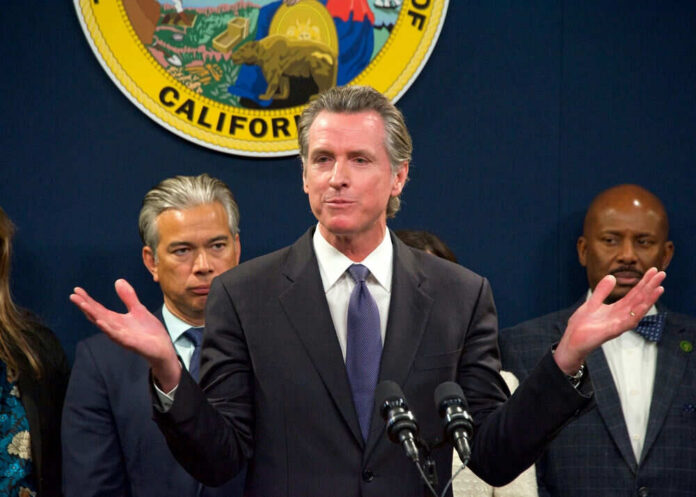
Governor Gavin Newsom has urged a national tax on billionaires while California advances its own wealth-tax measure. That puts the state at the center of a broader fight over who should pay for rising government costs. Supporters frame the tax as a fairness move, but critics see a familiar left-wing answer to fiscal trouble: tax the rich, then hope they stay put.
The California proposal would hit residents with at least $1 billion in net worth and tax them at 5 percent. The Legislative Analyst’s Office says billionaires living in California on January 1, 2026 would owe the tax, with payments due in 2027. The measure also allows taxpayers to spread payments over five years, but that convenience comes with an added fee.
What the Money Is Supposed To Fund
Backers say the tax is meant to protect health care, education, and food aid. The attorney general’s initiative text says the point is to raise revenue for high-quality health care, kindergarten through grade fourteen public education, and food assistance programs. Other summaries say 90 percent of the money would go to health care, with the rest split between education and food assistance.
That pitch is aimed at voters who worry about federal cuts and state budget strain. Supporters argue the state can tap a tiny slice of immense wealth without hurting normal families. They also say the tax would reach only about 200 billionaires, which makes it sound simple at the podium, even if the tax rules are much more complicated in practice.
Why Critics Say the Plan Could Backfire
The strongest objection is not ideological. It is mechanical. The state’s own analysis warns that the tax could bring in money at first, but then lose revenue later if wealthy residents leave or reorganize their affairs. Hoover Institution analysis goes further and estimates the measure could cost California an estimated $25 billion rather than produce a net gain. That is a serious warning for a state already struggling with spending pressure.
The exit problem is not theoretical. Reporting on the measure says the tax’s residency cutoff gives billionaires a clear reason to establish tax homes elsewhere before the deadline. Coverage also points to high-profile moves by wealthy figures, including Peter Thiel and others, as signs that capital can and will move when tax pressure rises. For conservatives, that is basic common sense: if you punish investment, you should expect less of it.
National Ambitions Raise the Stakes
Newsom’s national push gives the issue a bigger political meaning. He is not just defending a California ballot initiative. He is trying to turn billionaire taxation into a national message that can travel beyond one state. That matters because a policy sold as a local emergency fix can quickly become a template for larger government overreach, higher taxes, and more pressure on the productive class.
#SergeyBrin, cofounded @Google has made $140 billion since #Trump was elected.
If California passes a one-time 5% wealth tax, he will owe $14 billion and still have $270 billion. #Brin is spending $100 million to defeat the proposal. FIGHT OLIGARCHY. TAX BILLIONAIRE WEALTH pic.twitter.com/i6z1OT5m2A
— Peter N. Kirstein (@PeterKirstein) August 11, 2026
There is also a practical lesson here for voters outside California. The same arguments used in this fight could be copied elsewhere if the idea gains traction. Supporters call it a targeted tax on the ultra-rich, but the details show a broad wealth grab built on residency rules, asset valuation, and political promises that may not survive contact with reality. For readers worried about runaway government, that should sound familiar.
Sources:
nypost.com, pbs.org, politico.com, theguardian.com, wsj.com, lao.ca.gov, finance.yahoo.com, foley.com, cnbc.com, ntu.org, yeson40.com, itep.org, oag.ca.gov