

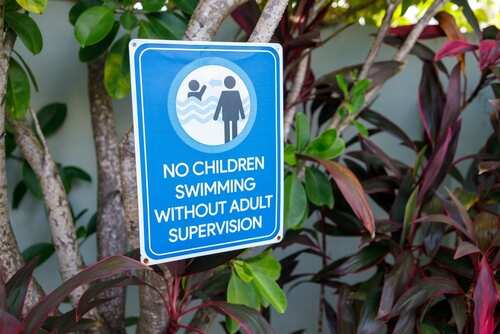
A New Jersey father’s raw words after finding his 3-year-old son lifeless in the family pool cut straight to the deepest fear every parent carries: what if, in the one moment that mattered most, you were not fast enough.
Story Snapshot
- A father in Blackwood, New Jersey finds his 3-year-old son face down in the family pool after the boy’s twin sister appears soaked from the water.
- He tells the world, “I wasn’t fast enough. I failed,” and says the images of that day are burned into his mind.
- The drowning is publicly described as a tragic accident, but no police or medical examiner report is yet on record to confirm the details.
- The case sits inside a wider New Jersey pattern where child drownings are common, and questions of supervision and pool safety often become legal battles.
A father, a backyard pool, and a moment that cannot be undone
On a Saturday in late June, a normal day at a Blackwood, New Jersey home turned into the kind of nightmare many parents do not even say out loud. The family had a backyard pool, like countless others across the state. At some point, the three-year-old boy’s twin sister came inside wet, a small detail that now feels like a siren that was missed. When the father, Michael, realized she had been in the pool, he rushed out to check.
Michael later said he found his son, Elijah, face down and motionless in the water. That image is the center of this entire story. He pulled his boy from the pool and did what every parent would do: he tried to bring him back. The specifics of the rescue attempts are not in the public record, but the outcome is. Elijah did not survive. A GoFundMe page and local reporting confirm that the three-year-old died that Saturday, June 27, 2026.
The public confession of a private burden
Most grieving parents disappear from public view, but Michael did something different. He chose to speak out. In a statement shared with local media, he wrote, “I wasn’t fast enough. I failed,” and “I’m so sorry I failed you”. Those are not lawyer-approved phrases. That is a father crushing himself under the weight of what happened. He also said the images are “forever burned into my mind” and that he will replay the moment every day of his life. Many parents reading that feel a chill, because they know how thin the line is between “close call” and tragedy.
His words matter because they shape how the public sees the event. Instead of blaming a product, a town, or some distant official, he points the finger inward. From a common-sense conservative angle, this looks like personal responsibility in its most painful form. He does not demand instant lawsuits or policy changes. He says, plainly, that he failed his son at the one moment he was needed most, even though every parent knows no one can be everywhere at all times.
What we know, what we do not, and why it matters
Despite the strong emotions, the actual public facts are thin. The reports say Elijah drowned in the family’s backyard pool, that his sister appeared wet, that the father found him face down, and that the child could not be saved. They do not give a precise timeline between noticing the wet sister and pulling Elijah from the water. They do not describe pool fencing, door alarms, or safety gates. They do not quote police or medical examiner reports confirming the exact manner of death or ruling out negligence.
This gap matters because New Jersey law treats pool deaths through the lens of “duty of care” and negligence. Pool owners are expected to prevent access when the pool is not in use and to have barriers that stop small children from wandering into danger. Lawyers who handle drowning cases point to failures like missing fencing, poor supervision, or unlocked gates as key factors. Yet in Elijah’s case, no lawsuit, police finding, or official negligence claim has surfaced in public reporting. The story, as it stands, is a father’s confession, not a court’s verdict.
A tragedy inside a larger pattern of risk and blame
Zooming out, Elijah’s death tragically fits a pattern. Drowning is the number one cause of unintentional death for children between ages one and four in the United States. National data show more than 4,000 unintentional drowning deaths each year, and a large share involve young children around pools. New Jersey health officials say about ten children under fifteen drown in the state each year, many in home pools and often tied to lapses in close supervision. These are not freak, one-in-a-million events. They are common and, in many cases, preventable.
Because of this, New Jersey families who lose a child in water often end up in court. One family won $13 million after a pool day turned deadly at a community facility, where safety duties were allegedly ignored. Another case reached a $26 million settlement when two teenage brothers drowned in a school pool, and lawyers argued there was a pattern of cover-ups and unsafe practices. These outcomes make clear that when property owners or institutions are careless, conservative values of accountability demand consequences, often heavy ones.
Balancing grief, responsibility, and the hard lessons for other parents
So where does that leave a father like Michael? Based on the public record, he has chosen moral responsibility even without a legal finding against him. He blames himself, not the state, not a company, not a vague “system”. From a common-sense viewpoint, that is both heartbreaking and honest. American conservative values emphasize parents as the first line of defense for their kids, not regulators or lifeguards. This case shows what happens when that line breaks for even a short window of time.
For other parents, the lesson is blunt. If you have a pool, your child’s life depends on both your eyes and your barriers. Fencing, self-latching gates, alarms, swimming lessons, and strict rules about water are not overkill; they are the “layered defense” experts say can prevent up to 80 percent of home pool child drownings. No law, no lawsuit, no settlement gives a child back. Elijah’s story is not just about one father’s worst day. It is a warning that every pool owner should treat like a flashing red light before summer fully arrives.
Sources:
nypost.com, dailyvoice.com, abc7ny.com, 6abc.com, youtube.com, whyy.org, facebook.com, cbsnews.com, glotwp.com