
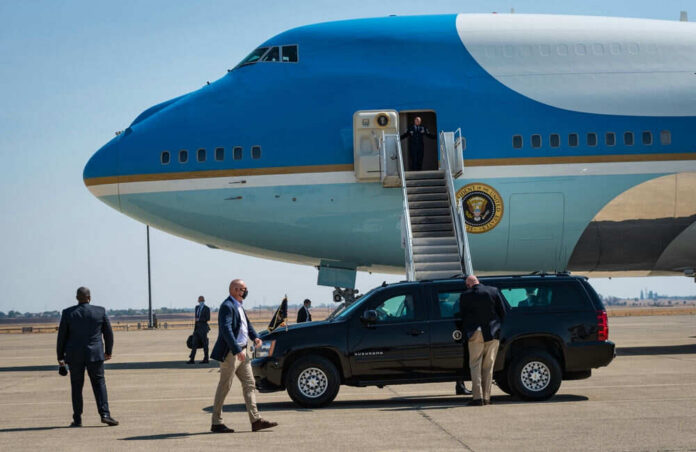
David Axelrod’s reaction landed on a larger problem: the press was flown on Air Force One even as the plane turned back for a safety issue, and the public still does not have a full threat explanation.
Quick Take
- White House officials said the aircraft returned because crew members detected a **minor electrical issue** and acted out of caution.
- Reuters reported that the aircraft landed safely and the press then moved to another plane to continue the trip.
- Reports now say the flight may have been used as a **decoy**, which is why Axelrod called the setup unsettling.
- The available record does not show a publicly released threat assessment, mission order, or after-action review.
What Happened on the Flight
President Trump’s aircraft turned back after crew members detected a minor electrical problem, according to White House press secretary Karoline Leavitt. Reuters reported that the plane landed safely and that members of the press were moved to another aircraft before the trip continued. The White House said the return was ordered out of an abundance of caution, which framed the event as a safety decision rather than a public emergency.
The details matter because the press was on the original aircraft when the turnback happened. Reuters said the reporters stayed in the travel sequence and were transferred after the safe landing. That is why the later claim got so much attention: if the plane was part of a deception plan, the press was not just present. It was inside the maneuver, whether it knew that or not.
Why the Decoy Claim Got Attention
A new report said the aircraft may have functioned as a decoy while President Trump moved separately. That account described a security operation tied to rising Iran-related concerns and said the larger plane continued on with journalists and staff. David Axelrod said it was “stunning” to think about people being used as “a decoy,” which helped push the story beyond a routine travel glitch and into a debate over consent, secrecy, and trust in government.
The conservative concern here is simple. If the government uses journalists inside a security maneuver, officials owe the public a clear explanation after the fact. The available reporting does not show a released threat memo, a sworn account, or a formal review proving that the press cabin was selected for deception. It also does not show any injury or proven harm. But it does show how little the public was told while the operation was underway.
Security Logic Versus Public Transparency
Protective operations are often secret, and that secrecy can hide the real reason for a flight change. Reuters and The Guardian both reported a safety-based explanation at the time, while later reporting added a possible security layer tied to a decoy move. Those pieces can both be true in part, but they leave a gap the public can feel immediately: a high-stakes decision was made inside a closed system, and outside observers were asked to trust the result.
That gap is why this story matters beyond one aircraft. Americans expect the White House to protect the president, but they also expect honesty when the press is pulled into the process. If the flight was only a precaution after a technical issue, officials should be able to say so plainly. If it was a deliberate deception step, that should be explained too. The record now shows a safe turnback, a plane swap, and a dispute over what the operation really meant.
Sources:
mediaite.com, nypost.com, reuters.com