
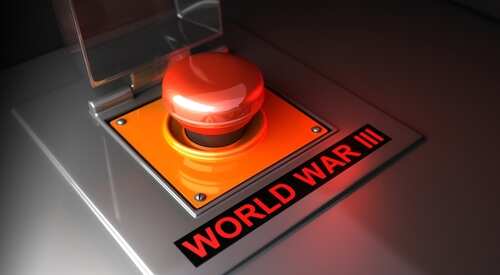
Tucker Carlson’s latest “world war is coming” warnings expose a deep split on the right over whether Washington’s foreign‑policy class is about to drag America back into another disastrous forever war.
Story Snapshot
- Tucker Carlson is again warning that U.S. policy toward Iran and now Venezuela could spiral into a wider war, with catastrophic costs for American lives and the economy.
- Other conservatives and GOP hawks insist these “World War III” alarms are exaggerated, arguing recent Iran and Israel clashes stayed regional and contained.
- The fight over Carlson’s warnings highlights a larger struggle inside the post‑Biden GOP between America‑First non‑interventionists and pro‑intervention neoconservatives.
- For Trump supporters burned by past globalist wars and Biden‑era inflation, the question is whether the D.C. establishment has really learned anything about unintended consequences.
Tucker’s World War Warnings and Why They Resonate With Trump Voters
Tucker Carlson has spent years telling his audience that a U.S. or Israeli strike on Iran is not just another Middle East dust‑up, but a potential trigger for a much larger war involving Russia, China, and the broader BRICS bloc. Drawing on Pentagon casualty estimates and the reality of fragile energy markets, he talks about thousands of Americans killed in the first week and gasoline prices so high they would crush working‑class families already hammered by years of inflation.
Those warnings land with a conservative base that watched the Biden years deliver higher prices at the pump, a weaker dollar, and green‑agenda assaults on American energy while global elites pushed climate conferences and Ukraine funding instead of border security. For blue‑collar Trump voters who remember Iraq, Afghanistan, and Libya, Carlson’s message that another regime‑change adventure could destroy both household budgets and national strength connects directly to their frustration with permanent‑war thinking in Washington.
Iran, Israel, and the Clash Between America First and Old‑Guard Hawks
The recent round of clashes among Iran, Israel, and U.S. forces in the region gave Carlson’s message fresh urgency. Iranian missiles flew, Israel responded, and American assets were targeted, yet the conflict ultimately stayed limited rather than exploding into the world war some feared. That outcome allowed critics in the conservative media and on Capitol Hill to say the worst‑case predictions were wrong, arguing strong deterrence and targeted strikes can contain enemies without triggering Armageddon.
Ben Shapiro and Senate Republican hawks seized on that point, mocking “World War III” talk as alarmist and accusing anti‑interventionists of undermining support for Israel. Inside the Senate, some GOP leaders now frame Carlson and similar voices as “anti‑Israel influencers” whose warnings should be treated like left‑wing cable commentary rather than serious strategy. Their argument is that American strength, not restraint, keeps the peace, and that too much public fear‑mongering only emboldens Iran’s regime and its terror proxies.
Venezuela, Congress Briefings, and Growing Distrust of the DC Security State
Carlson’s more recent comments about possible U.S. military action against Venezuela added a new front to the debate. When he claimed members of Congress had been briefed that “a war is coming,” and suggested President Trump might be expected to announce it in a national address, he tapped into a long‑running conservative skepticism about the permanent national‑security bureaucracy that outlasts elections and presidents. Even while he admitted he did not know if it would really happen, his message was clear: the war machine is always planning something.
For an audience that watched unelected officials undermine Trump’s first term, push the Russia‑collusion narrative, and back disastrous Biden‑era policies on the border and energy, the idea that Pentagon and intelligence insiders are gaming out future interventions is not far‑fetched. At the same time, serious conservatives who value a strong military caution that loose talk about secret plans can confuse allies, frighten markets, and make it harder for any commander in chief—Trump included—to use limited force when it is truly necessary for American security.
Did the “World War III” Predictions Help or Hurt the America‑First Cause?
The record so far shows no world war, but several close calls and a string of intense regional fights that could have gone much worse. Supporters of Carlson’s warnings argue that loud public opposition from the America‑First right helped box in the foreign‑policy establishment, making it politically harder to sell another Iraq‑style campaign to voters weary of sacrifice with little benefit. In that view, sounding the alarm early served as a crucial brake on reckless planners who underestimate escalation risks.
Critics counter that repeatedly predicting global catastrophe, especially under a Trump administration that has emphasized peace through strength and ending Biden’s chaotic interventions, risks dulling people’s ability to distinguish real red lines from media drama. If every flare‑up is “World War III,” many citizens may eventually tune out when a genuine, immediate threat emerges. For constitutional conservatives, the challenge is balancing healthy distrust of the establishment with sober, fact‑based judgment about when the use of force is justified.
What It Means for Conservatives in Trump’s Second Term
With Trump back in the White House and Biden’s globalist foreign‑policy team gone, the tug‑of‑war is now inside the right itself. One side wants a restrained, borders‑first strategy that avoids open‑ended wars and prioritizes domestic prosperity, energy dominance, and rebuilding the middle class. The other insists America must stay ready and willing to strike hard at regimes like Iran’s to protect allies and deter aggression, even if that means higher defense spending and more forward deployments.
For readers who care about the Constitution, limited government, and leaving their children a stronger, freer country, the stakes are high. A foreign‑policy misstep can blow up the budget, empower unelected bureaucrats, and justify new surveillance or emergency powers that never seem to go away. Whether one agrees with Tucker Carlson’s tone or not, his core warning—that careless intervention abroad can shatter liberty and prosperity at home—is a reminder conservatives cannot afford to ignore as they hold this administration, and every future one, to account.
Sources:
They Predicted World War III. They Were Wrong.
Tucker Carlson warns Neoconservative push for Iran war risks total disaster
Tucker Carlson: Congress briefed on possible war with Venezuela
Ben Shapiro Ruthlessly Mocks Tucker Carlson for Predicting Trump Would Drag U.S. Into World War III
Tucker Carlson Faces Backlash Over Venezuela War Claim
Senate Republicans mock Tucker Carlson’s Iran World War III warnings