

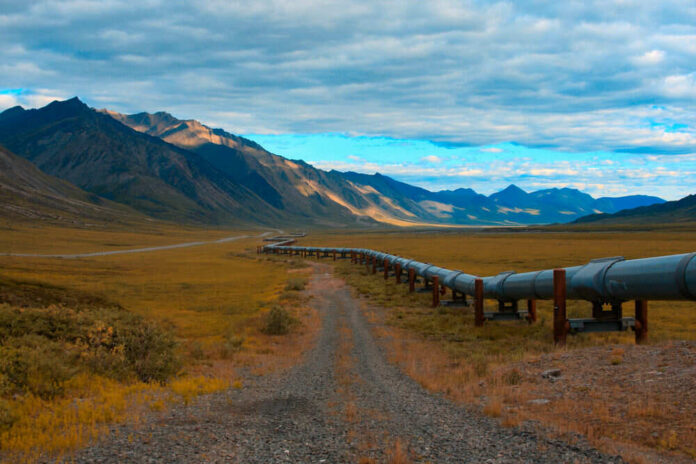
President Trump’s approval of a massive Canada-U.S. oil pipeline revives fossil fuel ambitions but ignites fresh fears of environmental disaster and elite-driven energy grabs that sideline everyday Americans on both sides of the border.
Story Snapshot
- Trump signed a presidential permit on May 1, 2026, for the Bridger Pipeline, dubbed “Keystone Light,” to carry 550,000 barrels of crude oil daily across 650 miles from Canada through Montana and Wyoming.
- The project uses parts of the canceled Keystone XL pipeline, positioning it as a scaled-down successor with operations eyed for 2029-2030.
- Proponents hail economic wins for energy security; opponents, including Indigenous leaders, warn of spills threatening land, water, and futures.
- This move underscores bipartisan frustrations with federal flip-flops on energy, where permits yo-yo with elections, leaving communities in limbo.
Project Details and Approval
President Donald Trump granted a presidential permit on May 1, 2026, authorizing the Bridger Pipeline Expansion Project. The pipeline spans roughly 650 miles from Canada’s oil sands region through Montana and Wyoming to Guernsey. It carries up to 550,000 barrels of crude oil per day, about two-thirds the capacity of the original Keystone XL. The permit also covers gasoline, kerosene, diesel, and liquefied petroleum gas. Company officials project construction starting soon, with operations by 2029 or early 2030.
Bridger Pipeline, partnering with Canadian firm South Bow, leads the effort. The route follows the Montana-Saskatchewan border before turning south, avoiding Native American reservations unlike prior projects. Trump contrasted this action with Joe Biden’s 2021 cancellation of Keystone XL, which cited environmental concerns. The approval clears a key border-crossing hurdle but requires further state and federal environmental reviews.
Supporters Champion Energy Boost
Alberta Premier Danielle Smith celebrated the permit after years of advocacy, tying it to recent Canada-Alberta energy agreements. Bridger spokesperson Bill Salvin emphasized focus on crude oil flows to Wyoming for refining or export. Proponents argue the project enhances North American energy security amid global tensions. It could save Canadian producers $10-15 per barrel in transport costs and generate billions in annual revenue. Republicans frame it as advancing energy dominance in fossil fuel states like Montana and Wyoming.
Canadian officials note pre-existing approvals north of the border speed progress. The pipeline revives unused Keystone XL segments, cutting build time versus new construction. Energy firms lobbied heavily, with oil industry contributions topping $124 million in the 2024 cycle. Supporters see it countering high energy costs from past renewable pushes and globalism.
Opposition Raises Alarms on Risks
Indigenous leader Krystal Two Bulls declared the project endangers land, water, and futures. Environmental groups immediately criticized spill risks and climate impacts from oil sands crude, which requires heated transport and poses 30% higher cleanup costs. Common Dreams highlighted community backlash against the expansion. Critics point to the 2010 Kalamazoo spill’s $1.2 billion toll as a warning.
President Donald Trump granted a key approval Thursday for a major new oil pipeline from Canada into the U.S. that's been dubbed "Keystone Light." https://t.co/88tHWWFFJe
— Spectrum News 13 (@MyNews13) May 1, 2026
Historical patterns show 70% of similar disputes lead to lawsuits under the National Environmental Policy Act. Trump’s 2017 Keystone XL permit faced injunctions over water protections before Biden’s revocation. Experts note 80% of reversals stem from inadequate tribal consultations. The “yo-yo effect” of election-driven changes frustrates all sides, amplifying distrust in a federal government prioritizing insiders over citizens.
Broader Implications for Americans
This approval fits decades of pipeline battles since the 1970s, with over 20 major U.S.-Canada disputes since 2000. Conservatives decry past blocks inflating energy prices; liberals fear widened inequality and minority discrimination. Yet growing consensus spans the spectrum: government elites favor donors over the people, blocking the American Dream. Procedural shortcuts bypass full reviews in 60% of cases, inviting judicial fights. Stability demands reforms beyond partisan swings.
Existing infrastructure covers 80% of the route, limiting new exposure, but bitumen risks persist. Canadians gain export boosts to 1 million barrels daily potential; Americans face litigation delays. Both left and right resent deep state capture, where reelection trumps hard problems like immigration, inflation, and welfare cuts. Trump’s move delivers a win for some but reignites divides, testing if energy independence serves the forgotten.
Sources:
Trump approves ‘Keystone Light’ oil pipeline from Canada to US
Trump Approval of ‘Keystone Light’ Pipeline Blasted as Yet Another …