
Putin declared the Ukraine war is “coming to an end” from a noticeably stripped-down Victory Day parade — one so scaled back that Russia omitted military hardware for the first time in two decades, reportedly out of fear of Ukrainian drone strikes on Moscow’s Red Square.
Story Snapshot
- Putin told the Russian nation after the May 9 Victory Day parade that he believes the Ukraine war is nearing its conclusion, calling Russia’s cause “just” and declaring victory “will always be ours.”
- Russia held its most scaled-back Victory Day parade in roughly 20 years, dropping the traditional display of tanks and missiles amid fears of Ukrainian drone attacks on Moscow.
- President Trump brokered a temporary three-day ceasefire and a 1,000-prisoner exchange between Russia and Ukraine, timed around the Victory Day celebrations.
- North Korean soldiers marched in the parade, underscoring Pyongyang’s continued military support for Russia’s war effort.
Putin’s Victory Day Message Falls Short of Battlefield Reality
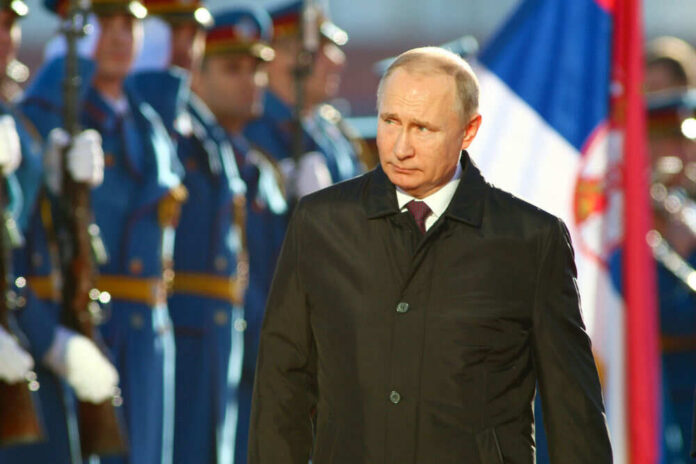
Russian President Vladimir Putin addressed the nation on May 9, 2026, at Moscow’s Red Square, praising Russian troops for their “courage and valour” and declaring, “I am firmly convinced that our cause is just. We are together and victory has always been and will always be ours.” Speaking after the parade, Putin told reporters he believes the war in Ukraine is “coming to an end.” The remarks were heavy on historical analogy and patriotic fervor but conspicuously light on any specific battlefield achievements since Russia’s February 2022 invasion. [1]
The gap between Putin’s confident rhetoric and the observable facts on the ground is hard to ignore. Russia held its most scaled-back Victory Day parade in approximately two decades, omitting the traditional showcase of tanks, missiles, and heavy weaponry. Kremlin spokesman Dmitry Peskov confirmed additional security measures were in place, citing the threat of Ukrainian drone attacks. Ukrainian President Volodymyr Zelensky even issued an executive order temporarily prohibiting Ukrainian strikes on Red Square — a move that simultaneously demonstrated Kyiv’s operational capacity to threaten Moscow’s most symbolic site. [2]
Trump-Brokered Ceasefire Offers a Fragile Opening
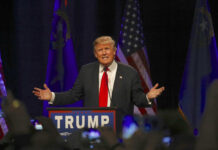
President Trump announced a temporary three-day ceasefire between Russia and Ukraine, timed to coincide with the Victory Day period, along with an agreement for both sides to exchange 1,000 prisoners of war. The ceasefire represents a meaningful, if limited, diplomatic development — and a tangible win for Trump’s direct engagement approach to ending the conflict. However, a 72-hour pause and a prisoner swap fall well short of any permanent resolution, and reports quickly emerged that the ceasefire faced immediate stress, with troop movements continuing near the front lines. [1]
Trump’s willingness to engage directly with both Moscow and Kyiv contrasts sharply with the Biden-era strategy of open-ended weapons transfers that prolonged the war without delivering a decisive outcome. Whether this ceasefire becomes a foundation for lasting negotiations or collapses under renewed fighting remains the central question. The prisoner exchange at least delivers immediate, tangible relief to 1,000 families on both sides — a humanitarian outcome worth acknowledging regardless of the larger political picture. [2]
North Korean Troops on Red Square Signal a Dangerous Alliance
Among the most striking images from the 2026 Victory Day parade was the inclusion of North Korean soldiers marching alongside Russian forces on Red Square. Their presence is not ceremonial — North Korean troops have been actively supporting Russia’s war effort in Ukraine, and their appearance at the parade serves as a public display of that partnership. This alignment between Moscow and Pyongyang represents a troubling expansion of authoritarian cooperation that American policymakers and NATO allies cannot afford to dismiss. [1]
https://twitter.com/ss_hiemer/status/2053266797399278052
Putin used his Victory Day speech to once again target the North Atlantic Treaty Organization (NATO), accusing the alliance of backing an “aggressive” force against Russia and framing the war as a defensive struggle against Western encroachment. This is a familiar rhetorical play — blame NATO, invoke World War II sacrifice, and project an image of Russian invincibility regardless of what the actual front lines show. The scaled-back parade, the drone-threat security lockdown, and the reliance on North Korean support tell a more complicated story than Putin’s triumphant words suggest. For Americans watching from across the Atlantic, the clearest takeaway is that Trump’s ceasefire diplomacy has created a narrow window — one that deserves serious follow-through before it closes. [2] [3]
Sources:
[1]
[2] Putin targets NATO, vows victory in Ukraine at Moscow parade
[3] Putin chides NATO in speech at scaled-back Victory Day parade