
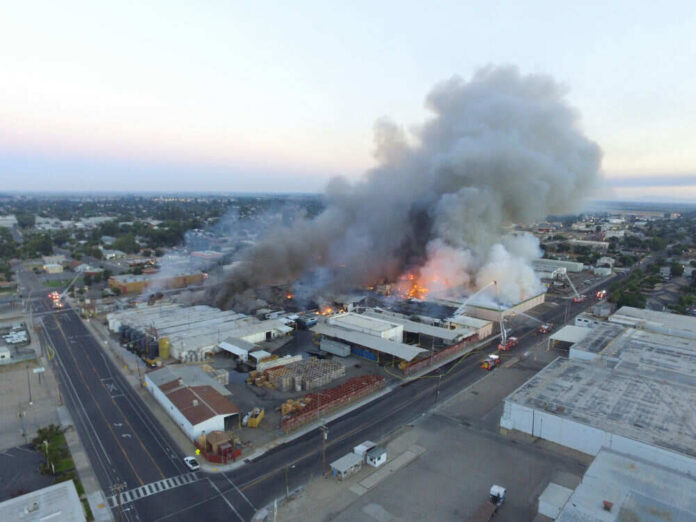
Satellite imagery now confirms Iran struck 228 U.S. military assets across 15 bases in the Middle East — far more than the Pentagon has publicly acknowledged — raising urgent questions about what the Trump administration knew and when it told Congress and the American people.
Story Highlights
- Washington Post analysis of over 100 satellite images confirms 228 U.S. military assets struck across 15 bases, including hangars, fuel depots, radar systems, and air defense equipment.
- Seven U.S. service members were killed and more than 400 wounded in Iranian strikes beginning February 28, 2026.
- Air defense interceptor stocks were severely depleted — 53% of THAAD and 43% of Patriot missiles consumed — according to satellite analysis.
- Repair costs are estimated at up to $5 billion across seven countries, per anonymous U.S. officials and congressional aides cited by NBC News.
What the Satellite Images Actually Show
A Washington Post analysis of more than 100 high-resolution satellite images, cross-checked against lower-resolution imagery to confirm authenticity, identified 217 structures and 11 pieces of equipment destroyed or damaged at U.S. military installations across the Middle East. [1] Targets included aircraft hangars, barracks, fuel storage tanks, radar systems, communications infrastructure, and air defense batteries spread across 15 separate bases. CSIS analyst Mark Cancian noted that “Iranian attacks were precise — no random craters,” underscoring the deliberate and systematic nature of the strikes. [2]
CNN’s independent investigation confirmed damage at a minimum of 16 American military sites spanning eight countries, including high-value assets such as raydomes, satellite communications dishes, and one out-of-production asset valued at roughly $500 million. [8] The breadth of confirmed damage across multiple independent analyses — Washington Post, CNN, and NBC — makes the Pentagon’s blanket “fully operational” statements increasingly difficult to accept at face value. [7]
American Lives Lost, Air Defenses Depleted
Six U.S. service members were killed on the first full day of the conflict at Ali al-Salem Air Base in Kuwait, where Iranian strikes destroyed nine fuel storage tanks and collapsed a tactical operations center. [1] A seventh service member died in Saudi Arabia. Survivors of the Kuwait strike reportedly criticized U.S. military preparedness at the site. [1] In total, more than 400 personnel were wounded across the affected bases — casualties that deserve full public accounting, not bureaucratic silence.
Iranian strikes also landed directly on U.S. air defense systems in Bahrain and Jordan, depleting 53% of available THAAD interceptors and 43% of Patriot missile stocks. [2] These are not minor logistics inconveniences — these are the systems designed to protect American troops from exactly the kind of attack that just occurred. Burning through more than half of THAAD capacity in a single conflict has serious implications for U.S. force readiness across the entire region.
Pentagon Stonewalling and the Transparency Problem
The official Pentagon response has been a categorical non-answer: “We do not discuss battle damage assessments for operations security reasons. Our forces remain fully operational and we continue to execute our mission.” [1] While operational security is a legitimate concern during active hostilities, the conflict has since moved toward ceasefire negotiations, and Congress is still being kept in the dark. Anonymous congressional aides told NBC News that “no one knows anything and it’s not for lack of asking.” [1]
🇮🇷🇺🇸🇩🇪
… escalating as Iran reports significant postwar reconstruction amid U. S. military buildup in the Strait of Hormuz
Iran's Housing Foundation announced the completion of repairs on 37,000 war-damaged buildings, with full reconstruction efforts projected through 2027.… https://t.co/cIJXXHHShn
— U.S.A.I. 🇺🇸 (@researchUSAI) May 4, 2026
NBC News, citing three U.S. officials, two congressional aides, and one additional source familiar with the damage, reported repair costs could reach $5 billion across seven countries — Bahrain, Iraq, Jordan, Kuwait, Qatar, Saudi Arabia, and the UAE. [2] Adding to transparency concerns, the Pentagon reportedly requested that commercial satellite companies restrict imaging of damaged bases, forcing journalists and analysts to rely heavily on imagery released by Iranian state-affiliated agencies. [1] That is an uncomfortable position for any administration claiming its forces emerged unscathed. Americans — and their elected representatives — deserve the full picture of what happened to U.S. troops and taxpayer-funded assets in this conflict.
Sources:
[1] Report: Iran Hit Hundreds of Targets in US Bases, Doing Far More Extensive Damage Than Reported
[2] Satellites Expose What Pentagon Won’t: Iran Hit 228 U.S. Military Assets
[7] At least 16 American military sites have been damaged in Iranian …
[8] CNN Reveals Extensive Damage to US Military Bases after Iranian …