
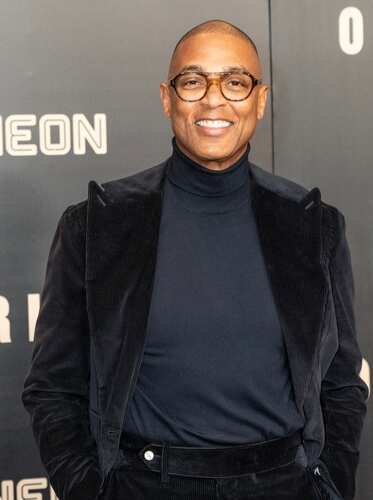
Don Lemon’s latest anti-Trump crusade isn’t a new documentary or a protest speech—it’s him floating a presidential run while facing fresh legal trouble tied to an anti-ICE demonstration.
Quick Take
- Former CNN host Don Lemon said he has thought about running for president and claimed he could run the country better than President Donald Trump.
- Lemon made the remarks during a March 31, 2026 appearance on the “Pod Save America” podcast hosted by Alex Wagner.
- He said he is not currently running and described looking for a “sign” before taking steps toward a campaign.
- Lemon’s political flirting arrives as he deals with a recent arrest connected to an anti-ICE protest, a backdrop that could complicate any serious bid.
Lemon Tests the Waters on a Podcast, Not a Ballot
Don Lemon used a March 31 interview on “Pod Save America” to describe a hypothetical run for the White House, saying he has thought about it and suggesting he could win. Lemon also said he could “definitely” run the country better than President Donald Trump, while stressing he has no campaign underway. Multiple outlets reported the comments the next day, turning an offhand media moment into a national political headline.
Lemon’s framing matters: he positioned the idea as “thinking out loud,” not as a formal announcement with staff, filings, or a platform. That distinction keeps the story in the realm of speculation, but it still signals how modern politics increasingly begins on podcasts and YouTube rather than in town halls. It also shows how celebrity-driven influence can collide with party politics, especially when Democrats are still searching for a clear post-2024 identity.
From CNN Anchor to Activist-Adjacent Celebrity Politics
Lemon’s public profile was built at CNN, where he worked for years and became a fixture of cable news opinion programming before his departure in 2023. Since then, he has operated as an independent media figure, building an audience on streaming and social platforms. That kind of platform can deliver instant reach without a traditional political organization, but it does not replace the ground-game demands of real campaigns: voter coalitions, fundraising networks, and credible issue plans.
The timing is hard to ignore. Reports tied Lemon’s presidential musing to a period when he has been in the news for reasons beyond media commentary, including an arrest associated with an anti-ICE protest at a church in Minnesota and related legal proceedings. Lemon has maintained he was acting as a journalist and has pleaded not guilty, but the case remains a live backdrop. Any serious presidential bid would face relentless scrutiny on that record.
“Better Than Trump” Isn’t a Platform—It’s a Talking Point
Lemon’s central claim—that he could do the job better than Trump—generated clicks because it is provocative, not because it is specific. Available reporting on his remarks emphasizes the confidence of the statement, but offers little detail on what policies he would pursue or how he would govern. That’s a major gap for voters who care about concrete outcomes: border enforcement, inflation, energy prices, public safety, and federal overreach—issues that have dominated conservative concerns for years.
The coverage also highlights Lemon drawing a comparison to Barack Obama’s rise, suggesting that an unconventional résumé can still lead to the presidency. That’s true in a narrow sense—American politics has produced outsider winners—but the comparison does not answer the basic questions of preparedness and priorities. For constitutional conservatives, personality-based campaigns are a red flag when they replace hard commitments on limited government, strong borders, and accountability across federal agencies.
What This Says About the Democratic Bench in 2026
Lemon’s flirtation with a run underscores a wider reality in 2026: Democrats still amplify media personalities as potential saviors, even when those figures have never administered a government agency or navigated legislative negotiations. Some commentators have pointed to Lemon’s audience as an advantage for a newcomer, while also noting party insiders can be skeptical of celebrity candidates. That tension—grassroots buzz versus institutional vetting—may decide whether this story fades or escalates.
Why Conservatives Should Watch the Substance, Not the Spectacle
The facts available so far show no campaign, no filings, and no policy blueprint—only a media figure testing a message that centers on opposition to Trump. Conservatives who lived through years of culture-war bureaucracy, spending blowouts, and border chaos know how quickly politics becomes theater instead of governance. Until Lemon offers specifics, voters are left with a familiar pattern: a headline-grabbing claim, a viral clip, and a political class eager to treat celebrity visibility as leadership.
As of early April, reporting indicates Lemon has not taken concrete steps toward a run and continues to describe the idea as conditional. That means the public is evaluating a persona more than a plan. For readers focused on constitutional order and competent administration, the most relevant takeaway is simple: the loudest anti-Trump voices still have to meet the same test as everyone else—serious proposals, a clean legal footing, and the ability to govern beyond the camera.
Sources:
Don Lemon: I Think About Running for President
Don Lemon hints he’d run for president, says he’d do better than Trump
Don Lemon on possibly becoming the first gay president: “I could run this country better than” Trump
Don Lemon Reveals He’s Thought About Running for President in Podcast Interview