
As the Pentagon warns that Chinese tech giants are tied to Beijing’s war machine, Chinese-made drones and gear keep showing up in ads on Western social media — raising real questions about what, exactly, we are helping China build.
Story Snapshot
- The Pentagon now labels Alibaba, Baidu, BYD and others as Chinese “military companies” tied to Beijing’s war strategy.
- The updated list hits 188 firms, including drone and robotics makers whose products can be used for war.
- Despite the warning, these companies can still advertise and sell tech, including drones, on platforms like Facebook and TikTok.
- The Trump administration’s move blocks Pentagon contracts and third-party purchases, but does not yet fully ban Chinese war tech from U.S. markets.
Pentagon Flags Chinese Tech Giants Over Military Links
The United States Department of Defense has officially named major Chinese firms like Alibaba, Baidu, and electric vehicle maker BYD as companies that support China’s military. This tag comes under Section 1260H of the National Defense Authorization Act, which focuses on firms that help the People’s Liberation Army through China’s military–civil fusion strategy. The Pentagon says these companies aid China’s defense base even if they look like normal consumer brands, pulling e‑commerce, search, cloud, cars, and robotics into a single military support system.
The latest update to the Pentagon’s “Chinese military companies” list is the biggest yet and now covers 188 entities, up from about 130–134 last year. Earlier lists already included drone maker DJI, and now add robotics firm Unitree along with battery, chip, and sensor makers that are vital for advanced drones and unmanned systems. This shows Washington now treats civilian tech—such as artificial intelligence, electric vehicles, robotics, and biotech—as dual‑use tools that can quickly feed China’s war machine.
Military–Civil Fusion: Why Consumer Tech Becomes War Tech
Military–civil fusion is the Chinese Communist Party’s strategy to erase the line between civilian industry and military power. Under this plan, China pulls in all parts of society—factories, labs, universities, and big tech firms—to support the People’s Liberation Army with new weapons and battlefield tools. Consumer drones, delivery robots, cloud computing, and data platforms are not “just gadgets” in this system; they are building blocks for smart bombs, battlefield surveillance, and targeting systems that can be turned against America and its allies.
U.S. government and defense experts say China has followed some form of this fusion approach since the 1980s, using dual‑use technologies like artificial intelligence and robotics to speed up military modernization. That is why Washington now looks beyond classic arms makers and focuses on everyday tech brands whose hardware and software can be repurposed for war. When a Chinese firm can sell off‑the‑shelf drones globally, those same platforms can carry advanced cameras, sensors, and strike payloads—and be plugged directly into the People’s Liberation Army’s growing “intelligentized” forces.
What the Blacklist Does — And What It Doesn’t
Being named on the Pentagon list does not instantly cut these companies off from U.S. markets, but it does change how the U.S. government must deal with them. Under recent law, the Defense Department is barred from signing new direct contracts with listed firms starting in 2026, and by 2027 it cannot buy their gear indirectly through third‑party suppliers. That is a major shift for procurement, especially when drones, sensors, chips, and network equipment from Chinese brands have quietly seeped into global supply chains for years.
The designation is mainly a warning to investors and contractors, signaling that these firms are tied to Beijing’s military project and carry serious national security risk. It can hurt their reputation, complicate access to U.S. capital markets, and lay the groundwork for tougher actions later, including sanctions or export controls. However, it does not yet stop these companies from advertising or selling consumer tech, including drones and robotics, on social media platforms used by Americans every day, which keeps the door open to continued spread of dual‑use hardware.
Chinese Drones, Social Media Ads, and U.S. Security Gaps
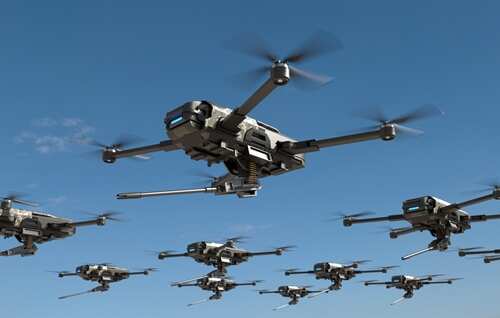
Chinese firms like DJI and Unitree are well known for selling advanced drones and robots that look like consumer toys but can be adapted for surveillance and battlefield use. These products, and similar platforms, are widely marketed online, including on Western social media sites such as Facebook and TikTok. The Pentagon list confirms that U.S. officials see such companies as part of China’s defense industrial base. But current reporting has not yet shown direct proof that specific advertised drone models are being sold straight to the People’s Liberation Army.
This gap in public evidence does not erase the risk; it shows how hard it is to track dual‑use gear that moves through global e‑commerce and ad networks. Analysts warn that civilian‑looking drones can reach military or proxy buyers through normal online channels, especially when platforms handle huge volumes of cross‑border sales with limited transparency. For now, the Trump administration’s actions mainly hit Pentagon contracting, not social media advertising. That leaves a blind spot where Americans can be shown, and even buy, hardware from firms their own government has flagged as helping an adversary’s war machine.
How Conservatives May See the Fight Ahead
For many right‑leaning Americans, this story touches core concerns about national security, constitutional government, and common sense. China’s leaders openly run a whole‑of‑society plan to turn civilian tech into weapons, yet Western platforms still profit from pushing those products to U.S. users. The Trump administration’s expanded blacklist is a step toward limiting taxpayer exposure, but it highlights a deeper problem: global tech rules, trade policy, and content moderation have not caught up with the reality of military–civil fusion.
Conservatives who care about strong borders, secure supply chains, and limited government will likely press for more transparency from social media companies and tougher guardrails on dual‑use imports. That could mean pushing Congress to demand ad‑level data on Chinese drone sales, tighter screening of foreign hardware in critical systems, and clear notice to buyers when a product comes from a firm the Pentagon links to China’s military. The goal is simple: stop helping an adversary arm itself, whether through defense contracts or “harmless” gadget ads on a phone screen.
Sources:
zerohedge.com, cnbc.com, timesnownews.com, thenextweb.com, fortune.com, x.com, gigazine.net, bloomberg.com, en.wikipedia.org, airuniversity.af.edu, csis.org, wirescreen.ai, cset.georgetown.edu, nbr.org