

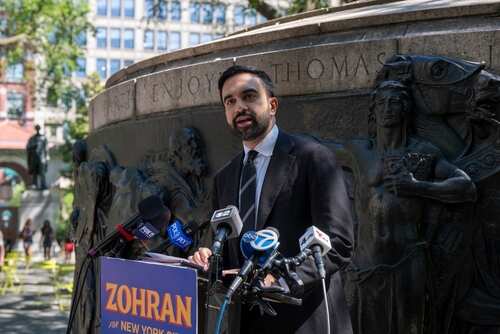
When New York City’s socialist mayor tells Jon Stewart that “socialism is just having a library,” he is pushing a feel‑good slogan that quietly expands government power far beyond books and into every corner of daily life.
Story Snapshot
- Zohran Mamdani used a Jon Stewart interview to sell democratic socialism as normal city services like libraries, schools, and fire departments.
- He defines socialism as government guaranteeing “dignity” and basic needs, which sounds harmless but means more taxpayer-funded programs and control.
- Experts say his vision matches a bigger welfare state, not classic socialism, but it still grows government at the expense of markets and local choice.
- Mamdani’s agenda in New York includes rent freezes, “fast and free” buses, universal childcare, and city-run grocery stores, all paid by higher taxes.
Mamdani’s Library Line: Turning Socialism into “Normal Life”
During his sit-down with Jon Stewart, New York City Mayor Zohran Mamdani described democratic socialism as something most Americans already accept in daily life. He pointed to the public library, the fire department, and public schools as examples of “socialist” ideas we now see as basic services. By tying socialism to familiar institutions that people use and trust, he tries to make a radical label feel safe, routine, and almost boring for skeptical viewers.
In that broader media push, Mamdani repeats a simple pitch: socialism just means government making sure regular people can live with dignity. On The Weekly Show, he says it means choosing “every day to fight for working people” and believing everyone deserves a dignified life, no matter their income. That language is designed to calm fears, especially older voters wary of big-government schemes, by focusing on moral goals instead of the trade-offs and costs that follow.
What Mamdani’s “Dignity” Agenda Looks Like on the Ground
Behind the soft words, Mamdani backs a heavy policy list for New York City. News coverage describes his democratic socialist program as rent freezes, “fast and free” public transportation, universal childcare, and pilot publicly owned grocery stores across the city. He links these ideas to an older tradition he calls “sewer socialism,” where the city runs more things directly and uses public money to shape everyday life, not just fix roads and fight crime. That approach greatly expands which services government owns and manages.
On the campaign trail and in office, he promises quick and free buses, a rent freeze for rent-stabilized units, and broad childcare access. He says Wall Street and business leaders have “nothing to fear,” framing his agenda as a return to New Deal-style Democratic politics, not a revolution. But every “free” service he offers has a bill attached. Those costs land on taxpayers, landlords, riders, and small businesses who must absorb higher taxes, regulations, or price controls to make the program appear free at the point of use.
Experts Say It’s Welfare-State Expansion, Not True Socialism
Political writers and scholars who studied Mamdani’s platform say his use of the word socialism is loose and more like a modern welfare state. One Washington Post analysis explains that American politicians who call themselves democratic socialists often push strong social programs and rules, while true socialism historically means government or worker control of production and major industries. A fact check from Al Jazeera notes that Mamdani does not call for seizing private companies or ending private property, confirming his agenda is redistribution and services, not full state ownership.
Reports from outlets like National Public Radio, The New York Times, and Jacobin describe his real focus as affordable city life and municipal services. They highlight buses, childcare, groceries, and rent rules, not the government taking over factories or banks. For conservatives, that distinction matters less than the direction of travel. Even if it is not classic socialism on paper, the result is still more government power, more spending, and more pressure on families and businesses who are already squeezed by high taxes, inflation, and rules coming from faraway city hall offices.
Mamdani’s Framing and What It Means Beyond New York
In an interview about his rise, Mamdani tells The New York Times that democratic socialism means the government must guarantee every person a life of dignity and meet essential needs most people agree on. That framing sounds kind, but it ignores real debates over who decides what is “essential,” how much it costs, and whether government can be trusted with that much authority. Once politicians claim a moral duty to provide more and more “needs,” there are few clear limits on how large, expensive, and intrusive city government can become.
Mayor Zohran Mamdani on Socialism, Politics & NYC // The Weekly Show with Jon Stewart https://t.co/apaxv0J4Ca
— Howard Breen (@howard_breen) July 23, 2026
Across national media, his message fits a pattern where the left rebrands bigger government as simple “public goods” while critics see creeping control. Calling socialism “just having a library” blurs the line between basic shared services and full-scale economic planning. For conservatives who support President Trump’s efforts to cut red tape, defend local control, and push back on woke big-city experiments, Mamdani’s rhetoric is a warning sign. It shows how easily pleasant language about dignity and libraries can mask a long-term shift toward more mandates, more spending, and less freedom for families trying to make their own choices.
Sources:
reason.com, americandebunk.substack.com, singjupost.com, youtube.com, instagram.com, foxnews.com, cnn.com, washingtonpost.com, nytimes.com, cityandstateny.com