
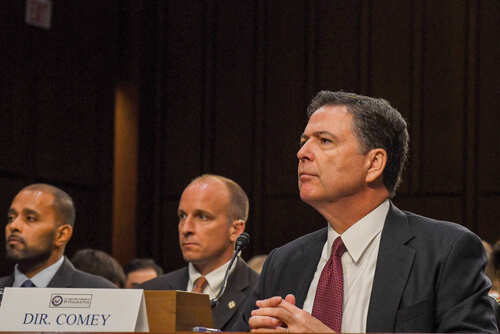
Newly surfaced emails alleging James Comey’s bias and leaks reignite debates over his role in the 2016 election.
Story Highlights
- Emails suggest Comey anticipated working for Hillary Clinton.
- Allegations of leaks and political bias during 2016 election investigated.
- Controversy remains a partisan debate with no official evidence.
- Public trust in FBI and DOJ scrutinized.
Allegations Against Comey
In a story that has captured the attention of political analysts and the public alike, newly surfaced emails purportedly show former FBI Director James Comey authorizing leaks of sensitive information. These emails suggest that Comey anticipated working under a Hillary Clinton presidency, leading to allegations of political bias and coordination with Clinton’s campaign during the 2016 election. Critics argue that these actions may have influenced the election’s outcome, raising questions about Comey’s impartiality.
The controversy is rooted in Comey’s handling of the Clinton email investigation. In 2015-2016, the FBI investigated Clinton’s use of a private email server for official communications. Although Comey announced no charges against Clinton, he criticized her handling of classified information, a move that was highly controversial and seen as potentially influencing the election. The timing of Comey’s announcements, particularly reopening the investigation days before the election, has been debated extensively.
Official Investigations and Findings
Despite the uproar from the released emails, official investigations have not substantiated claims that Comey authorized leaks with expectations of working for Clinton. The Department of Justice Inspector General’s 2018 report found no evidence of political bias in the FBI’s handling of the Clinton investigation. Furthermore, Comey has publicly denied any wrongdoing, maintaining that his actions were in line with legal standards and FBI independence.
The controversy continues to be a topic of partisan debate. However, no conclusive evidence has emerged to support allegations of intentional leaks or pre-election collusion. The DOJ and State Department reviews found procedural errors but concluded there was no criminal conduct or political bias. These findings have not silenced critics, who maintain that Comey’s decisions were politically motivated.
Impact and Implications
The allegations against Comey have had lasting effects on public trust in law enforcement agencies like the FBI and DOJ. The controversy has further fueled debates about election integrity and the potential for political interference in law enforcement. While the short-term impact likely influenced public perception during the 2016 election, the long-term implications have been an erosion of trust in these institutions, leading to increased scrutiny and calls for reforms in communication protocols.
Smoking Gun? Damning Emails Appear to Show Comey OK'd Leaks, Expected to Work for 'President Hillary' https://t.co/2C0zWN0kL5
— Culture War Ace (@CultureWarAce) November 5, 2025
Political analysts and experts continue to weigh in on the controversy, with some arguing that Comey’s actions, although controversial, do not constitute criminal conduct or clear political bias. Others believe the timing of his announcements had a measurable impact on the election, though the intent behind these actions remains a subject of debate. As the story unfolds, the narrative serves as a reminder of the challenges faced by law enforcement agencies in maintaining impartiality in politically sensitive investigations.
Sources:
The James Comey Saga in Timeline Form
Hillary Clinton Email Controversy
Timeline of Hillary Clinton’s Email Saga
NPR Story on Comey’s Testimony
VOA News Coverage of Comey’s Firing