
The federal government’s own firearms experts reportedly can’t match the bullet that killed Charlie Kirk to the rifle prosecutors say was used—an evidentiary gap that could reshape a politically explosive case.
Story Snapshot
- ATF forensic testing reportedly failed to ballistically link the fatal bullet to a recovered .30-06 bolt-action rifle tied to suspect Tyler James Robinson.
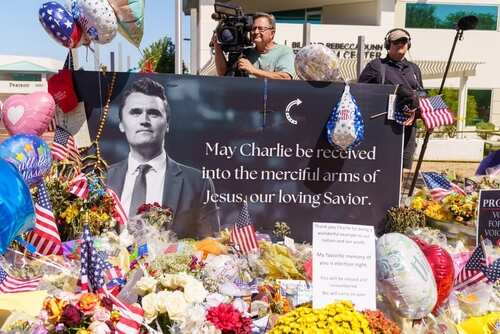
- Charlie Kirk was assassinated at an outdoor Turning Point USA event at Utah Valley University in Orem, Utah, with investigators placing the shooter on a campus rooftop roughly 142 yards away.
- Early claims that ammunition featured “trans/antifascist” engravings were later corrected, underscoring how fast-moving leaks can distort public understanding.
- Robinson surrendered after a manhunt and was charged with aggravated murder as prosecutors sought the death penalty.
ATF mismatch introduces a major courtroom problem
ATF analysis reportedly failed to connect the bullet that killed Turning Point USA co-founder Charlie Kirk to the rifle recovered near the scene, a development described as a “bombshell” in the ongoing prosecution. The rifle—reported as a Mauser 98 chambered in .30-06—was said to have been found wrapped in a towel with a spent cartridge and additional rounds. If the bullet can’t be linked to that weapon, prosecutors face a harder task proving the shooting instrument beyond a reasonable doubt.
Ballistics evidence often plays a central role in firearm cases because it can provide a straightforward bridge between a suspect, a weapon, and a fatal round. When that link breaks, the case typically leans more heavily on other proof—such as surveillance, digital records, witness accounts, and timelines. The research provided does not explain why the bullet could not be matched or whether the bullet was too damaged to compare, so the strength of the prosecution’s alternative evidence will matter more than ever.
What investigators say happened at Utah Valley University
Investigators have described Kirk’s killing as a targeted, sniper-style attack during an outdoor “American Comeback Tour” stop at Utah Valley University on September 10, 2025. The event drew roughly 3,000 attendees, and Kirk was struck by a single shot to the neck at about 12:23 p.m. Reports place the shooter on the roof of the Losee Center, roughly 142 yards away, before Kirk collapsed and panic spread through the crowd, according to eyewitness descriptions summarized in the research.
Authorities later recovered the rifle and ammunition near the scene, and a manhunt followed. On September 11, 2025, the suspect—Tyler James Robinson, then 22 and reported to be from Washington, Utah—surrendered to a local sheriff. Prosecutors subsequently charged Robinson with aggravated murder, and the research indicates they sought the death penalty while framing the attack as politically motivated. The underlying facts of the timeline are widely consistent across the provided sources, even as key forensic questions remain unresolved.
Ammo “engraving” claims were corrected—fuel for distrust either way
Early reporting suggested ammunition connected to the case carried “trans/antifascist” engravings, a claim that immediately inflamed an already polarized political environment. Later reporting and corrections stated that the “trans” markings were not present, highlighting how preliminary law-enforcement bulletins and leaks can be incomplete or wrong in fast-developing investigations. A senior law-enforcement official warned, according to the research, that early information can be a mix of accurate and inaccurate details that gets misinterpreted once it hits the public.
For conservative readers who have watched major institutions mishandle politically sensitive stories for years, that kind of whiplash predictably deepens distrust—whether it’s distrust of the media pipeline, distrust of bureaucracies, or both. At the same time, the correction matters because it narrows what can responsibly be concluded about motive from that specific detail. The sources provided still describe the assassination as occurring amid contentious debates—especially around transgender issues—but the research does not provide definitive motive proof beyond the prosecution’s theory.
FBI’s “full-weight” probe shifts attention to digital trails and possible accomplices
With the ballistic mismatch now looming over the courtroom narrative, the FBI’s broader investigative work becomes more central. The research describes an expansive federal probe that included bullet-trajectory remapping, reviews of weapon transport, visitor logs, and analysis of phone and Discord data, along with public requests for tips tied to a $100,000 reward. Officials have also examined unusual factors such as hand signals and private-jet paths, according to the research summary.
Those investigative steps don’t prove a second shooter or an accomplice, but they do show investigators treating the case as more complex than a simple “gun found, case closed” storyline. If prosecutors intend to keep seeking the maximum penalty, they will need a cohesive evidentiary chain that stands up to aggressive cross-examination—especially when one of the most intuitive links in a shooting case, a ballistic match, is reportedly missing. Limited public detail in the provided research prevents a full assessment of what substitute evidence exists.
For the Trump administration in its second term, the public expectation is straightforward: deliver transparency, competence, and constitutional policing—without the bureaucratic fog that has surrounded too many high-profile cases. That means clearly explaining what the ATF result does and does not mean, and ensuring the public sees a process focused on facts rather than narratives. Conservatives don’t need theatrics; they need answers that can survive in court and stand the test of time.
Sources:
Rifle in Charlie Kirk assassination had ammo with ‘trans,’ ‘antifascist’ engravings, sources say
Rifle in Charlie Kirk assassination had ammo with ‘trans,’ ‘antifascist’ engravings, sources say