
President Trump set a 2028 target for a nuclear-powered Mars mission and tied it to a Moon-to-Mars plan led from Kennedy Space Center.
Story Highlights
- Trump reaffirmed a Moon-to-Mars plan with a nuclear-powered spacecraft aimed at 2028.
- The White House detailed NASA–Energy Department projects: Space Reactor-1 and Lunar Reactor-1.
- NASA hosted the President’s remarks at Kennedy Space Center during its Max Power programming.
- Artemis missions and commercial landers remain the stepping stones toward a future lunar base.
Trump’s Agenda: Lead in Space, Go Moon-to-Mars
President Trump said the United States will return astronauts to the Moon and then push onward to Mars. He linked the goal to new power and propulsion, including the first nuclear-powered interplanetary spacecraft targeting a 2028 launch to Mars. He framed the mission as proof of American leadership and resolve. His remarks placed exploration, technology, and national strength on the same track. He stated that this is the direction his administration set, and that work is underway now.
The White House laid out supporting policy steps in an October fact sheet. It announced a formal partnership between the National Aeronautics and Space Administration and the Department of Energy to build two systems. Space Reactor-1 is a nuclear-powered Mars spacecraft planned for a 2028 launch. Lunar Reactor-1 is a fission power system intended for the lunar surface. The policy draws on a 2025 executive order on American space superiority and a national security memorandum.
Institutional Backing and Program Tracks
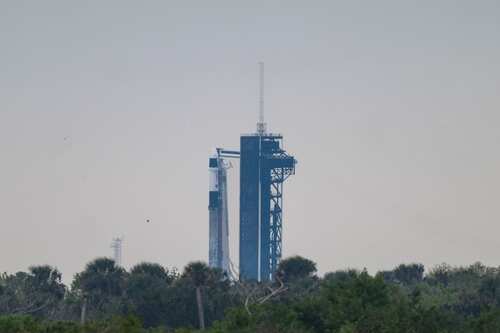
NASA hosted the President’s appearance at Kennedy Space Center as part of its Max Power series. Agency promotion described the event and placed it on the official calendar. Local and national outlets tracked the visit as a major space policy moment. Coverage identified Jared Isaacman as the NASA administrator and noted the agency’s focus on leadership, technology, and flight demonstrations tied to the broader exploration path.
Trump linked the lunar effort to lasting infrastructure, not a one-off flag-planting. Reporting around the event said NASA, under Administrator Isaacman, pledged to create a lunar base. It also said Artemis III would test lunar-lander docking with commercial partners like SpaceX and Blue Origin. That path sets up cargo, crew, and power systems that can grow into a long-term foothold on the Moon before going on to Mars.
Nuclear Propulsion: Why It Matters for Mars
Mars missions need faster trips and greater margin for safety and cargo. Nuclear propulsion promises higher performance than chemical rockets. The National Academies have reported that nuclear thermal or nuclear electric propulsion can cut transit times and expand mission options. Shorter trips reduce radiation exposure and limit wear on crews and hardware. The administration is betting that a nuclear-powered spacecraft will give the United States a clear edge on deep-space timelines and payloads.
The policy also seeks to align federal roles. The Department of Energy brings reactor and safety expertise. The National Aeronautics and Space Administration brings flight systems, mission design, and integration. The White House fact sheet says both will drive Space Reactor-1 for the Mars mission and Lunar Reactor-1 for surface power. That pairing aims to solve propulsion for deep space and reliable power for a lunar base at the same time, under one strategic banner.
Kennedy Platform and Near-Term Milestones
The Kennedy Space Center setting underscored that this agenda will live or die on real milestones. NASA’s Artemis flight sequence, commercial lunar landers, docking tests, and power demonstrations are the next steps. Local coverage logged the day’s events and the message: America plans to lead in space by building, flying, and proving systems on the Moon first, then heading to Mars with advanced propulsion and surface power to match the mission needs.
Conservative Lens: Strength Through Science and Industry
Trump’s plan links national pride to practical innovation. The approach values clear goals, strong industry partners, and energy dominance extended into space. A lunar reactor supports a working base, not a photo-op. A nuclear Mars ship aims to shrink travel time and expand American reach. These steps reflect limited government in design, but decisive government in mission setting and policy. The stated 2028 target is ambitious, and success will depend on steady execution across agencies and contractors.
Sources:
facebook.com, forth.news, washingtonexaminer.com, whitehouse.gov