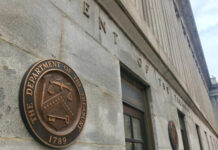


Congress just passed a major spending package that deliberately excludes the Department of Homeland Security, leaving America’s border security agency in funding limbo while behind-the-scenes negotiations over a massive $175 billion border enforcement plan continue to unfold.
Story Highlights
- House passed three-bill spending package funding Justice, Energy, Interior, and Commerce departments while purposely excluding DHS
- DHS remains under continuing resolution through January 30 as negotiations over historic $175 billion border security funding continue
- Trump administration seeking to bypass Democrats by funding DHS expansion through reconciliation rather than traditional appropriations
- Freedom Caucus chairman signals conservatives will have greater influence over upcoming DHS funding decisions
Congressional Leadership Plays Strategic Games with Border Security
The House approved a three-bill spending package on January 8 that funds the departments of Justice, Energy, Interior, and Commerce, along with EPA, NASA, and other federal science agencies. The 397-28 vote sends the package to the Senate, where Majority Leader John Thune plans immediate consideration. However, this calculated move deliberately separates less controversial agencies from the politically explosive DHS funding debate, revealing the high-stakes maneuvering around border security priorities.
DHS Caught in Funding Crossfire as January Deadline Looms
Despite passage of this minibus package, only half of the twelve annual appropriations bills would be completed, leaving DHS and other agencies under a continuing resolution expiring January 30. This precarious situation restricts new program starts and freezes spending near prior-year levels, hampering planning for expanded detention capacity, surveillance systems, and Coast Guard modernization. The artificial separation exposes how establishment politicians are willing to gamble with homeland security funding for political leverage.
Trump’s $175 Billion Border Plan Drives Congressional Strategy
The administration’s unprecedented $175 billion DHS investment proposal explains why congressional leadership segregated homeland security funding from routine appropriations. This massive border enforcement expansion includes $74.9 billion for ICE detention and workforce growth, $66.8 billion for CBP barrier construction and surveillance technology, and $24.2 billion for Coast Guard capabilities. The plan specifically targets mass removal operations, border wall completion, and advanced security technology deployment—core promises that resonate with Americans demanding secure borders.
Freedom Caucus Chairman Andy Harris signaled that conservative members will have “a little more access to the bills and the ability to have an impact” on the next funding tranche, which includes DHS. This suggests hard-line conservatives are positioning themselves to extract maximum border enforcement concessions and immigration restrictions, potentially threatening to oppose any watered-down DHS appropriations that fail to deliver meaningful border security improvements.
Reconciliation Strategy Aims to Bypass Democrat Obstruction
The administration’s decision to pursue DHS funding through reconciliation rather than traditional appropriations represents a shrewd political calculation to avoid giving Democrats leverage over border security investments. By using budget reconciliation procedures, Trump can secure multi-year homeland security funding without linking it to domestic spending increases that Democrats typically demand. This approach prevents the border security agenda from being “held hostage” in omnibus negotiations where Democrats historically extract concessions for their favored programs.
This funding strategy could fundamentally reshape how homeland security operates, shifting from annual discretionary appropriations to a hybrid model with substantial mandatory authority through 2029. Such a structural change would insulate border enforcement operations from year-to-year political fights while establishing a long-term acquisition runway for immigration enforcement priorities. For conservatives frustrated with decades of broken border promises, this approach offers hope for sustained, comprehensive action rather than temporary fixes.
Sources:
DHS Big Beautiful Bill Funding GovCon Cheat Sheet
Fiscal Year 2026 Discretionary Budget Request
H.R.4213 – DHS Appropriations Act, 2026
House passes three-bill spending package with weeks left to avoid a shutdown
Major takeaways for federal agencies from the latest bipartisan spending package