
A nine-week-old baby on Usha Vance’s chest turned a routine tarmac walk into a national gut-clench.
Story Snapshot
- Video shows Usha Vance briefly lose footing exiting Marine Two with her infant son secured to her chest.
- She grabbed the railing, steadied, smiled, and kept moving; no fall or injury occurred.
- Uniformed personnel nearby did not step in as she recovered on her own.
- Media framed the moment as a “near-fall” or “scare,” fueling viral debate over safety and optics.
What The Video Actually Shows On The Marine Two Stairs
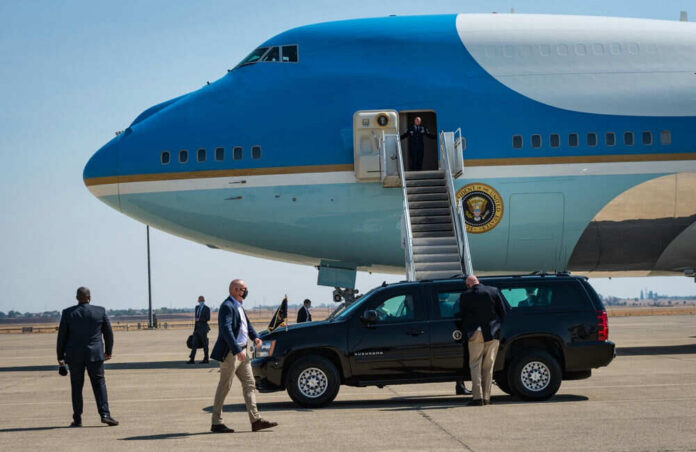
Camera footage from Joint Base Andrews captures Usha Vance stepping off the helicopter with her son strapped to her chest. She appears to miss a step near the bottom, lunges forward, and grabs the railing with speed. She regains balance and keeps walking, smiling as she gathers herself and checks the baby. Reports describe the child as nine weeks old and secured in a front carrier throughout the slip. Coverage confirms no fall or injury and a quick recovery.
Observers fixated on the still figures at the base of the stairs. Multiple reports note uniformed personnel did not move while she stumbled and recovered. The clip shows them remaining at attention as she grasps a second railing and stabilizes. Some outlets amplified that detail to question readiness. Others noted she handled it alone in a second, which made help unnecessary in real time. The baby remained strapped in place and protected by her posture.
Why A Split-Second Slip Looks Bigger Than It Was
Major outlets framed the scene as a “near-fall,” a “scare,” or “terrifying” to match the jolt viewers feel when a parent trips with a newborn. That language lifts a brief mishap into a broader story about safety culture. Yet the same reports stress she quickly caught herself and carried on. The most conservative reading remains strongest here: a human stumble, a firm recovery, and no harm done. The evidence supports that restrained take.
Calls to blame the people on the tarmac move beyond the facts in hand. The video does show no one touching her during the slip. It does not show a clear chance to intervene without risk, nor does it cite any rule that they must. No official statement or protocol excerpt in current reporting says those personnel should have broken stance on that step. Claims of dereliction need more than a viral clip to stand up.
What Protocols Could Clarify Next Time
A short, factual release from the White House Military Office or Secret Service would close the loop. Did protocols instruct personnel to remain at position until a full stop on the last step? Was assistance staged but withheld because she stabilized? These are simple, yes-or-no points. Right now, media summaries do the work that checklists and after-action notes should do. Until officials speak, common sense says judge the result: mother and child safe; movement resumed.
Viewers saw a mother’s first instinct: protect the baby, find the rail, square your feet, breathe. That matches the on-screen facts. Critics can argue the optics were poor. But optics are not outcomes. Conservative sense favors proportion. Save outrage for failures that injure, for rules ignored, or for patterns that repeat. A stumble that ends with a steady step does not clear that bar. The country wins when we keep our fire for real breakdowns, not one-second scares.
Sources:
irishstar.com, usatoday.com, news.abplive.com, hindustantimes.com, nypost.com