
President Trump’s blunt message celebrating Robert Mueller’s death is reopening the raw fight over whether federal power was used to target Americans for politics.
Quick Take
- Former FBI Director and Special Counsel Robert S. Mueller III died Friday night, March 20, 2026, at age 81; his family confirmed the death Saturday and asked for privacy.
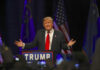
- President Trump responded on Truth Social with a highly provocative statement: “Good, I’m glad he’s dead. He can no longer hurt innocent people!”
- Mueller’s career spanned the FBI’s post-9/11 transformation and the Russia interference investigation that dominated U.S. politics from 2017 to 2019.
- Major outlets report no official FBI statement at the time of publication, leaving the public response largely driven by political figures and media coverage.
Mueller’s Death, Family Statement, and What’s Confirmed
Robert S. Mueller III died Friday night, March 20, 2026, at 81, according to reporting that cited a family statement issued the following day. The family asked for privacy as news spread nationwide. Reports did not specify a cause of death, and the FBI did not immediately offer a public comment. The basic timeline—death Friday night, confirmation Saturday—has been consistent across multiple outlets.
Mueller’s passing quickly became more than an obituary item because it arrived with political baggage that never really cooled. As FBI Director from 2001 to 2013, he oversaw the bureau during the post-9/11 shift toward counterterrorism, serving under both Republican and Democrat administrations. That institutional legacy, however, is now inseparable from the later Trump-Russia special counsel investigation that defined his public image for many Americans.
Trump’s Truth Social Reaction Drives the News Cycle
President Trump responded on social media with a line that news organizations immediately highlighted for its severity: “Robert Mueller just died. Good, I’m glad he’s dead. He can no longer hurt innocent people!” The comment is being treated as the central “breaking” element because it is not a standard presidential condolence. It also mirrors years of Trump’s public anger over the special counsel probe and what it represented.
The available reporting does not add new factual findings about Mueller’s death, but it does show how the old Russia-investigation battle lines remain intact in 2026. Supporters who believed the investigation was an unfair political effort see Trump’s comment as an unfiltered verdict on what they viewed as weaponized bureaucracy. Critics see it as indecorous. Either way, the reaction is functioning as a flashpoint that drags the country back into a dispute many voters hoped was settled.
The Russia Probe Record: What Mueller Found and What He Didn’t
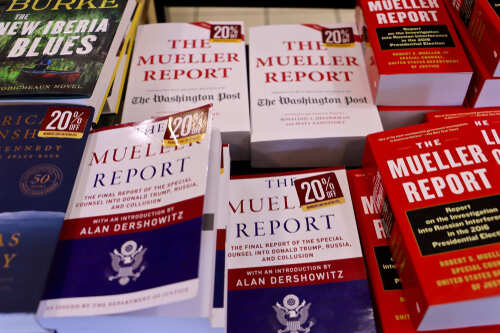
Mueller was appointed special counsel in May 2017 by Deputy Attorney General Rod Rosenstein to investigate Russian interference in the 2016 election and possible links to Trump’s campaign. His final report, released in March 2019, ran 448 pages and resulted in charges against six Trump associates, while not finding a criminal conspiracy between the Trump campaign and Russia. The report discussed obstruction questions without reaching a traditional prosecutorial conclusion.
From a constitutional perspective, the key fact pattern still matters because it highlights the tension between aggressive federal investigations and the public’s demand for accountability. The research provided indicates the report did not establish the central collusion narrative as a criminal conspiracy, yet the process consumed years of attention and fueled distrust in institutions. That distrust is precisely why a former special counsel’s death—normally a somber, apolitical event—now lands like a political grenade.
Mueller’s Institutional Legacy and Unanswered Questions
Mueller’s tenure as FBI Director began just before the September 11 attacks and continued through 2013, making him one of the longest-serving directors in modern history. Reporting notes that he helped push the bureau from a primarily crime-focused model into a stronger counterterror posture. At the same time, later controversies—such as public frustration over the Russia probe’s impact and its ultimate findings—complicate any single narrative of his public service.
Some details remain limited in the immediate coverage. The publicly reported accounts do not specify a cause of death, and while past reporting referenced a Parkinson’s diagnosis disclosed by his family in 2025, the available sources do not confirm a direct link to his passing. In the near term, the practical outcome is political: Mueller’s death closes the book on a major figure, but Trump’s reaction ensures the debate over federal investigative power and political accountability stays alive.
Sources:
FBI director Robert Mueller dies