

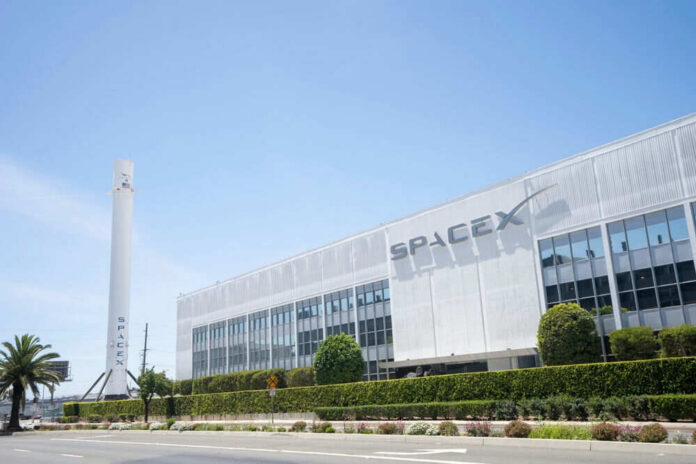
SpaceX is asking public markets to fund a moonshot at a $1.75 trillion price—and the playbook behind it could move the whole market.
Story Highlights
- Reuters reports an all-primary SpaceX IPO aiming at $1.75 trillion and at least $75 billion raised to the company.
- Nasdaq-100 “fast entry” lets giant IPOs enter the index in about 15 trading days, shaping near-term demand.
- Valuation heavyweight Aswath Damodaran pegs SpaceX closer to $1.2–$1.3 trillion, with noted risks.
- Morningstar and James Chanos say the price leans on hype and unproven assumptions, not today’s cash flows.
What the IPO signals about power, pace, and price
Reuters says SpaceX plans an all-primary offering that targets a $1.75 trillion valuation and at least $75 billion to the company. That structure sends a clear message: fuel growth, not insider cash-outs. The ask is bold, but it fits the firm’s long game in launch and satellite broadband. The size alone would test how much investors will pay today for tomorrow’s infrastructure and platforms at global scale.
Nasdaq’s new rule now fast-tracks major newcomers into the Nasdaq-100. Evaluations can begin on day seven, with inclusion possible after day fifteen. That timeline shrank from months to weeks, and it matters. Index trackers may become buyers far sooner, which can support early trading. The rule does not bless a valuation; it changes the plumbing of demand. Smart investors separate plumbing-driven flows from durable value.
The bull math: dominance, cadence, and optionality
Backers point to unmatched launch cadence, lower costs, and Starlink’s expanding reach. The logic says a firm that controls the heavy-lift highway to orbit and runs a global broadband network can layer more businesses on top. The all-primary raise funds more rockets, satellites, and ground gear. If growth keeps compounding, a rich multiple finds support over time. That is the upside case in one line: own the pipes, own the platform, then own the profits.
Index mechanics add a near-term kicker. Faster inclusion means earlier passive demand, which can absorb float and reduce volatility. That can help a mega-offering settle. But passive demand is not a moat; it is a mirror of the index. When the mirror breaks, it cuts indiscriminately. A conservative lens treats any forced buying as a temporary tailwind, not a reason to pay any price for a story stock.
The bear math: earnings power and narrative stretch
Morningstar argues the price is far ahead of fundamentals and flags a fair value near $63 per share. The note warns that much of the pitch leans on untested technology, especially in artificial intelligence, where costs sprint and winners are not fixed. That view fits a long American tradition: buy great companies at good prices, not any price at all. Discipline now means better odds later when hype fades and cash flow rules again.
James Chanos calls the $1.75 trillion tag unrealistic for the next five years and highlights steep revenue multiples. He says launch still loses money and sees Starlink as real but worth only a few hundred billion dollars. The point lands with common sense: a sky-high multiple can work for a while, but history punishes thin margins and big promises when the cycle turns. Markets forget gravity until they remember it all at once.
The referee’s tape: Damodaran’s middle path
New York University professor Aswath Damodaran reviewed the numbers and places SpaceX near $1.2–$1.3 trillion. He cites a reported $2.6 billion operating loss and questions a total addressable market inflated by massive artificial intelligence estimates. He still sees huge potential across launch and broadband, but he trims the narrative to what cash flows can justify. That balance—dream big, price right—aligns with healthy markets and investor sanity.
Researching with Grok.
SpaceX ($SPCX ) is a newly public, high-growth platform spanning launch, satellite broadband, and AI compute. It listed on Nasdaq in June 2026 and remains one of the most expensive large-cap growth stories in the market.
Leadership
Elon Musk is founder,…
— Cristianius (@Cristianius1) August 28, 2026
Here is the takeaway for retail investors. The structure and the index rule may float shares early. The story may become true over time if execution stays sharp and capital is disciplined. But patience has a price. Standing aside until hype cools and numbers talk is not cowardice; it is craft. Conservative investing favors margin of safety, not fear of missing out. If the business is as great as fans believe, it will still be great at a fairer price.
Sources:
youtube.com, mexc.com, investorplace.com, bloomberg.com, kucoin.com