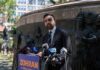


California Governor Gavin Newsom’s defamation lawsuit against Fox News challenges the network’s editorial decisions, sparking a debate on media accountability and free speech.
Story Highlights
- Newsom sues Fox News for $787 million over alleged defamation.
- The lawsuit centers on Fox’s editing of a Trump video clip.
- Newsom claims the network aired false information about a call.
- The case raises questions about media accountability and free speech.
Newsom’s Defamation Lawsuit Against Fox News
Governor Gavin Newsom of California has filed a defamation lawsuit against Fox News, seeking $787 million in damages. The lawsuit alleges that Fox News anchor Jesse Watters deliberately edited a video clip of former President Donald Trump. The clip in question involved a phone call between Newsom and Trump regarding the deployment of National Guard troops to Los Angeles. Newsom argues that Fox’s misrepresentation was intentional and aimed at damaging his credibility.
Newsom’s legal team emphasizes that the removal of Trump’s “a day ago” comment from the video significantly altered its context. This omission, they claim, falsely suggested that Newsom had lied about the timing and content of his conversation with Trump. By drawing parallels to the Dominion Voting Systems settlement in 2023, Newsom seeks to hold Fox News accountable for its editorial decisions under similar circumstances.
Fox News’s Defense and Editorial Discretion
Fox News has responded vigorously, characterizing the lawsuit as a “transparent publicity stunt” designed to suppress free speech critical of Newsom. The network argues that its editorial choices, including the decision to edit the video clip, fall within the realm of protected speech under the First Amendment. Fox News maintains that its actions were within legal bounds and that the lawsuit lacks merit.
The network’s defense is built on the principle of editorial discretion, asserting that their choices, even when controversial, are protected. This defense mirrors traditional media industry arguments that emphasize the importance of editorial freedom in maintaining a diverse and independent press. As the case progresses through Delaware courts, the legal battle will likely focus on the boundaries between editorial discretion and deliberate misrepresentation.
Implications for Media Accountability
The lawsuit brings to light significant issues concerning media accountability and the potential for defamation claims to impact editorial practices. Should Newsom succeed, it could set a precedent that deliberate video editing to misrepresent context is actionable defamation. This would have far-reaching implications for how news organizations handle video content, potentially altering editorial decision-making across the industry.
Beyond the immediate legal battle, the case underscores the evolving relationship between political figures and media organizations. Newsom’s willingness to pursue formal litigation marks a shift from traditional methods of addressing perceived media bias. Regardless of the outcome, the lawsuit may encourage other political figures to consider similar legal actions, fundamentally altering the dynamics of political-media relations.
Sources:
California Gov. Gavin Newsom Sues Fox News for $787 Million in Defamation Case
California Newsom Lawsuit Against Fox News
Lawsuit Against Fox News: Media Accountability and Free Speech
Gavin Newsom’s Top 5 Lies from the Fox News Debate