

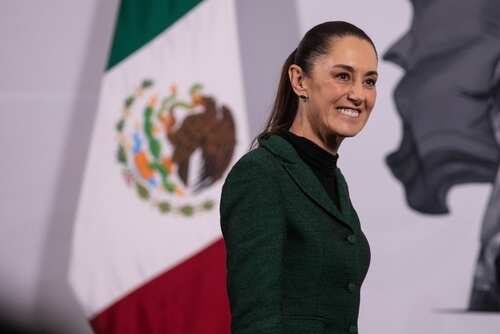
Mexican President Claudia Sheinbaum is weighing legal action against Elon Musk after the tech billionaire baselessly accused her of being controlled by drug cartels—allegations that surface just one day after her government successfully eliminated one of the hemisphere’s most dangerous cartel leaders.
Story Snapshot
- Elon Musk accused Mexican President Sheinbaum of cartel control without evidence on his X platform
- The timing is particularly absurd—coming immediately after Mexican forces killed El Mencho, leader of the Jalisco New Generation Cartel
- Sheinbaum’s government is evaluating legal action for defamation against one of the world’s wealthiest men
- The incident highlights dangerous patterns of tech billionaires spreading unsubstantiated claims that undermine foreign governments
Musk’s Baseless Accusations Contradict Military Success
Elon Musk posted on X that Sheinbaum was “just saying what her cartel bosses tell her to say,” offering zero evidence for the inflammatory claim. The accusation came on February 24, 2026, one day after Mexican security forces captured and killed Nemesio Oseguera Cervantes, known as El Mencho, who led the Jalisco New Generation Cartel for nearly three decades. The operation resulted in 30 cartel members killed alongside 25 National Guard officers and one prison guard, demonstrating the government’s willingness to confront organized crime directly.
Sheinbaum called the allegations “absurd” during her morning press conference, noting the obvious contradiction. Her government lawyers are now reviewing whether to pursue legal action against Musk. She emphasized that the vast majority of Mexican citizens recognize the work of armed forces and her administration’s daily efforts against cartels. The successful elimination of one of the hemisphere’s most dangerous criminals directly refutes Musk’s reckless claims about government complicity with organized crime.
Pattern of Unfounded Attacks on Mexican Leadership
This incident follows a disturbing pattern of high-profile figures making unsubstantiated accusations against Mexico’s government. President Trump previously claimed Sheinbaum had “no control” over Mexico and that “the cartels run Mexico,” despite acknowledging her as a “brave woman.” These baseless accusations typically lack any evidentiary foundation but reflect disagreements over Mexico’s security strategy, which shifted away from the militarized “war on drugs” approach that fueled violence and cartel fragmentation under previous administrations.
Luisa Alcalde, president of the ruling Morena party, fired back at Musk with pointed criticism. She stated that “wealth does not give moral authority” and urged the billionaire to use his massive platform to address drug consumption, addiction, and disinformation rather than amplifying unfounded conspiracy theories. Alcalde emphasized that lives lost in the fight against cartels—often fueled by consumption in the United States—are worth infinitely more than any Silicon Valley fortune. Her response highlights a crucial point: American demand drives Mexican cartel violence.
Tech Billionaire Influence Threatens International Discourse
Musk’s position as owner of X gives his statements disproportionate reach and influence, creating asymmetrical power dynamics that allow unverified claims to shape international perceptions. The platform has billions of users worldwide, meaning Musk’s baseless accusations about a foreign head of state receive instant global amplification without fact-checking or accountability. This represents a troubling development where tech billionaires can potentially destabilize diplomatic relations and undermine legitimate governments through their control of major communication platforms.
Mexican Senator Alejandro Murat defended Sheinbaum’s security policy, arguing the El Mencho operation “demonstrates that the Mexican armed forces and security forces should not be underestimated: they have acted with resilience and dedication, protecting both Mexican and American citizens.” The successful operation provides concrete evidence contradicting narratives of government weakness or cartel control. Mexico faces genuine challenges with cartel violence—more than 130,000 people are listed as missing—but addressing these challenges requires honest assessment rather than politically motivated fabrications.
Legal Action Could Set Important Precedent
If Sheinbaum proceeds with legal action, the case could establish significant precedent regarding defamation claims against high-profile figures making international accusations. The incident raises fundamental questions about responsibility and accountability when social media platform owners use their positions to spread unsubstantiated claims about world leaders. No formal lawsuit has been filed yet, as government lawyers continue reviewing options. The legal evaluation occurs while Sheinbaum focuses on public messaging emphasizing her administration’s security achievements and legitimacy.
This controversy highlights broader concerns about platform governance and misinformation. When tech billionaires amplify baseless conspiracy theories, they undermine factual discourse and legitimate policy debates. The alignment between Musk’s allegations and Trump’s previous unsubstantiated claims suggests coordination or ideological agreement regarding Mexico’s approach to organized crime. Regardless of disagreements over security strategy, spreading evidence-free accusations about cartel control serves no constructive purpose and damages international relations built on mutual respect and honest dialogue between sovereign nations.
Sources:
Mexico’s Claudia Sheinbaum threatens legal action against Elon Musk – The Independent
Mexican president considers legal action against Elon Musk over drug cartel accusation – Fox News
Sheinbaum considers lawsuit against Elon Musk for ‘absurd’ cartel accusation – Mexico News Daily