
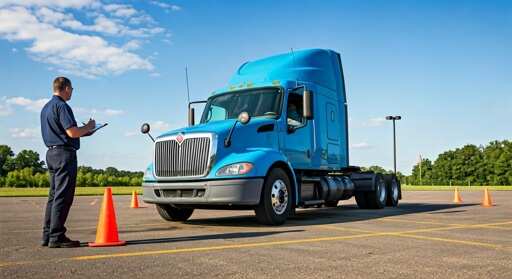
The same “trust us” government mindset that got Americans stuck with chaos at the border and runaway spending also let thousands of trucking schools effectively certify themselves—until the Trump administration finally pulled the plug.
Quick Take
- Transportation Secretary Sean P. Duffy announced nearly 3,000 CDL training providers were removed from the federal registry for noncompliance, with about 4,500 more put on notice.
- Federal officials say some providers falsified information or failed to maintain required curriculum, records, instructors, or equipment.
- Duffy argues the Biden-era approach relied too heavily on self-certification, enabling “CDL mills” to push unqualified drivers through the system.
- FMCSA says providers on notice have a limited window to respond with proof of compliance or risk removal.
Trump DOT Moves to Purge Noncompliant CDL Schools
U.S. Transportation Secretary Sean P. Duffy said the Department of Transportation has begun its most aggressive enforcement action yet against noncompliant commercial driver’s license training providers. The department announced nearly 3,000 providers were removed from the Federal Motor Carrier Safety Administration’s Training Provider Registry, while roughly 4,500 additional providers received notices tied to potential removal. Officials cited issues such as falsified data, missing documentation, and failure to meet required training standards.
The enforcement action matters because the federal registry is where new drivers must find approved Entry-Level Driver Training before they can test for a CDL. The DOT’s position is straightforward: when the registry becomes a paperwork exercise rather than a verified training system, the public pays the price on highways shared by families, school buses, and commuters. FMCSA Administrator Derek D. Barrs said providers that cannot meet requirements should not be training drivers.
How “Self-Certification” Became a Weak Link in Highway Safety
Industry reporting describes a core design flaw: the registry largely operated on self-certification rather than real federal validation of whether a provider had functioning trucks, qualified instructors, or a documented curriculum. Freight-focused coverage notes that fraud linked to CDL training has surfaced for decades across administrations, but the scale of the current removals highlights how widely the system could be abused. Under that kind of honor system, “CDL mills” can thrive until audits finally arrive.
Duffy’s public critique targets the Biden-Buttigieg era for overseeing a model that allowed bad actors to “game the system.” The available materials support the broader point that self-certification existed and that enforcement lagged, but they do not clearly establish that any one official personally invented the approach. What is clear is that the Trump DOT is now using its authority to force compliance: providers placed on notice are expected to respond with evidence within a set timeframe, or face removal.
What the Crackdown Means for Drivers, Companies, and Families
In the short term, the crackdown can disrupt trainees who enrolled in programs that suddenly lose registry status, and it can tighten the pipeline for carriers already feeling driver shortages. That tradeoff is politically uncomfortable for a country already stretched by inflation pressures and high energy costs, especially as voters demand competence at home while the nation is absorbed in a major overseas conflict. Still, federal officials are framing the action as a public-safety necessity, not a bureaucratic preference.
Limits, Oversight, and the Next Rulemaking Fight
The DOT says it plans additional reforms, including moving away from self-certification. That next step is where many conservatives will focus, because a safer system does not require an open-ended regulatory state. A durable fix would pair clear national minimum standards with verifiable audits and transparent enforcement, without trapping legitimate schools in red tape. The current record also contains a key limitation: most publicly cited updates cluster around the December 2025 announcement, with fewer confirmed 2026 developments.
Sean Duffy Says Biden Transportation Secretary Pete Buttigieg Allowed Trucking Schools to SELF-CERTIFY (VIDEO) https://t.co/BIbo2go46J #gatewaypundit via @gatewaypundit
— Donaldo (@Donaldo11865283) March 27, 2026
For voters already skeptical of Washington promises, this episode lands as a familiar lesson: government programs built on trust instead of verification invite fraud, then demand emergency cleanups later. Duffy’s move shows what targeted enforcement can look like when an agency is willing to remove bad actors rather than issue endless guidance memos. The real test will be whether the next reforms protect safety without creating a permanent compliance maze that punishes the honest operators left standing.
Sources:
Trump administration purges 3,000 CDL schools from federal registry