
President Trump extended the U.S.-Iran ceasefire indefinitely on April 21, 2026, exploiting deep fractures within Tehran’s regime while maintaining a naval blockade that keeps pressure on America’s most dangerous adversary in the Middle East.
Story Snapshot
- Trump reversed his earlier refusal to extend the ceasefire, citing requests from Pakistani mediators and calling Iran’s government “seriously fractured”
- The U.S. naval blockade remains fully operational despite the ceasefire extension, with American forces maintaining readiness to resume military operations
- Internal divisions between Iran’s civilian negotiators and the hardline Islamic Revolutionary Guard Corps expose Tehran’s leadership chaos
- Iranian officials dismissed the extension as a potential “ploy for a surprise strike,” demonstrating the regime’s paranoia and instability
Trump Exploits Iranian Leadership Chaos
President Trump announced the indefinite ceasefire extension via Truth Social just hours before the original two-week agreement was set to expire. The decision came after meetings with national security advisors and followed urgent requests from Pakistan’s Army Chief Asim Munir and Prime Minister Shehbaz Sharif, who have served as mediators. Trump explicitly stated Iran’s leadership remains “seriously fractured,” buying time for Tehran to produce a unified negotiating position. This strategic pause allows the administration to exploit internal Iranian divisions while maintaining maximum military and economic pressure through the ongoing blockade.
Naval Blockade Maintains Strategic Pressure
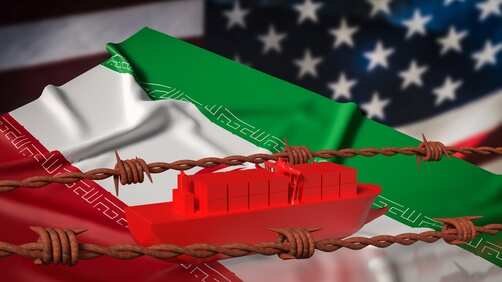
The U.S. Navy continues enforcing a comprehensive blockade of Iranian ports and the Strait of Hormuz, an action Tehran considers equivalent to an act of war. Over the weekend prior to Trump’s announcement, American naval forces seized an Iranian cargo vessel attempting to bypass the blockade in the Arabian Sea. The President ordered military forces to “stay prepared” for immediate action despite the ceasefire extension. This dual approach of diplomatic pause combined with relentless economic strangulation demonstrates Trump’s commitment to achieving American objectives without conceding leverage, a stark contrast to previous administrations’ tendency to offer relief before securing concrete results.
Iranian Regime Split Between Pragmatists and Hardliners
Tehran’s response to the ceasefire extension revealed the deep fractures Trump referenced, with civilian leaders and the Islamic Revolutionary Guard Corps taking opposing positions. Iranian Speaker Bagher Ghalibaf and Foreign Minister Abbas Araghchi support continued negotiations, while IRGC Commander Ahmad Vahidi opposes any talks while the blockade persists. Ghalibaf publicly dismissed the extension as holding “no significance” and accused the administration of planning a surprise attack. This internal chaos prevents Iran from presenting a coherent negotiating strategy, as all factions await direction from Supreme Leader Ayatollah Ali Khamenei, whose response was expected but has not materialized.
Pakistan Mediation Efforts Face Uncertain Future
Vice President JD Vance’s planned trip to Islamabad for a second round of mediation talks was canceled after Iranian officials declined to participate, stalling diplomatic momentum. Pakistani officials continue pushing for comprehensive peace negotiations despite Tehran’s reluctance, with Prime Minister Sharif expressing hopes for a breakthrough deal. However, the combination of Iran’s internal divisions, ongoing American military pressure, and the regime’s deep distrust of Trump’s intentions creates significant obstacles to productive negotiations. The administration’s willingness to extend the ceasefire suggests confidence that time favors American interests as economic pressure from the blockade continues crippling Iran’s already struggling economy.
Trump’s approach reflects a core conservative principle: negotiate from strength, never weakness. By maintaining the blockade while offering diplomatic space, the administration forces Iran to confront its internal contradictions without sacrificing American leverage. This strategy stands in sharp contrast to previous failed agreements that provided sanctions relief upfront, allowing Tehran to rebuild its military capabilities and fund regional terrorism. The fractured Iranian leadership now faces a choice between unifying behind pragmatic negotiations or watching their economy collapse while their rivals consolidate power, a dilemma entirely of the regime’s own making.
Sources:
Trump extends Iran ceasefire, citing “fractured” Iranian government – Axios
Iran-US Trump War Ceasefire Talks Stalemate – Time Magazine