
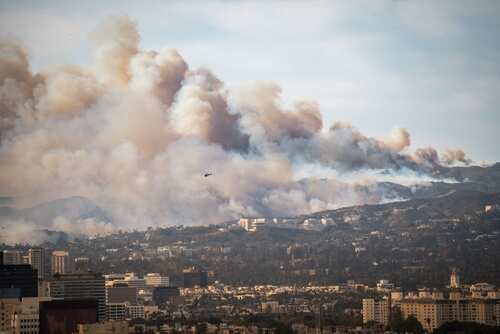
The Hawk Fire outside Reno was sparked by people and then blown into a city-scale crisis.
Story Snapshot
- Officials list the cause as human while the exact spark remains under review.
- Winds, low humidity, and dry grass and brush drove explosive growth past 10,500 acres.
- About 90,000 residents faced evacuation orders or warnings across northwest Reno.
- Nevada’s governor declared a state of emergency as crews fought on multiple fronts.
Human ignition, dangerous conditions, and a fast run toward Reno
Washoe County’s emergency update names the Hawk Fire’s cause as human and places the origin off Hawk Meadow Trail near Somersett on Reno’s northwest edge. That single fact explains why investigators treat this as a preventable event while they work to pin down the precise source. The fuel bed was primed with dry grass and brush. Strong, gusty winds and very low humidity let a small start become a wall of flame racing toward neighborhoods and the city core.
Reporters on the ground described flames pushing from the Sierra foothills toward central Reno, threatening thousands of homes and even reaching the edge of the University of Nevada campus. That push was consistent with wind-driven spotting and rapid runs across cured fine fuels. Fire behavior in these conditions is simple physics. Embers fly downwind. Slopes and canyons funnel air. Grass fires move fast and outflank engines unless anchor points hold. Residents saw that play out in hours, not days.
Evacuations, emergency orders, and a multi-agency response
The county and city issued tiered “Get Set” and “Go Now” orders that touched about 90,000 people as the footprint expanded across northwest Reno and into the North Valleys. The governor declared a state of emergency for Washoe County to free up resources and speed support, a standard but vital step when fires threaten dense suburbs. Shelters opened at the Reno-Sparks Convention Center, bringing together county services and the American Red Cross of Nevada to handle evacuees.
Local, state, and federal crews surged engines, dozers, and aircraft. The plan aimed to slow the head of the fire, protect structures along Somersett and Robb Drive, and hold lines near North McCarran Boulevard. Evacuation policing and neighborhood patrols helped prevent re-entry and looting, which lets firefighters work without constant traffic conflicts. That cooperation is the unglamorous backbone of urban-interface firefighting and saves both lives and homes.
Cause versus spread: different questions with different answers
Officials said the fire was started by people, while noting that they had not yet released a more specific cause. That distinction matters. “Human-caused” covers accidents, negligence, and intentional acts, and it often takes time to sort out. Spread is a separate, science-based story. Dry grasses and brush, low humidity, and wind are a known recipe for big runs in the Great Basin and Truckee Meadows region. Blaming weather does not dodge human responsibility; it explains why a single mistake can endanger a city.
HAWK WILDFIRE FORCES NEARLY 50,000 TO EVACUATE NEAR RENO
NEARLY 50 THOUSAND PEOPLE IN THE GO NOW ZONE… UNDER STRICT ORDERS TO EVACUATE AS THE MASSIVE HAWK WILDFIRE HAS GROWN TO 15 THOUSAND ACRES…
RENO, NEVADA FIRE CHIEF DAVE COCHRANE.,: “Take all your belongings, everything…— Worldwide News Network (@WorldwideNNX) August 24, 2026
National data show people start most wildfires across much of the United States, including the Great Basin, which covers western Nevada. That is why public messaging stresses simple behavior changes: no off-trail sparks, careful equipment use, and full cold-out for any flame. Personal responsibility aligns with common sense and conservative values. Freedom requires discipline, especially when one careless act can force tens of thousands of neighbors from their homes overnight.
What residents needed to know as the fire grew
Officials urged early evacuation for those in “Go Now” zones and warned others to be “Set” as the footprint shifted with wind shifts. The airport in Stead saw disruptions. Road closures moved as crews worked to keep engines clear of civilian traffic. Media updates highlighted that containment remained low while firefighters hunted for holdable lines and safe anchor points. That is normal during the first burn period of a wind event. The goal is survival and structure defense until weather breaks.
Maps showed the fire pushing northeast toward North Virginia Street and into the North Valleys, with nearly 1,000 homes threatened in early tallies. The county flagged the origin area off Hawk Meadow Trail and reminded residents that grass and brush were the primary fuels. That profile helps explain both the speed and the tactical choices: engines and dozers near homes, aircraft cooling hot spots, and hand crews cutting lines where access and terrain allow. Those basics, done fast and well, decide the final loss count.
Sources:
facebook.com, cnn.com, rgj.com, ingest.abcnews.com, emergencywashoe.com, 2news.com, thenevadaglobe.com, fresnobee.com