

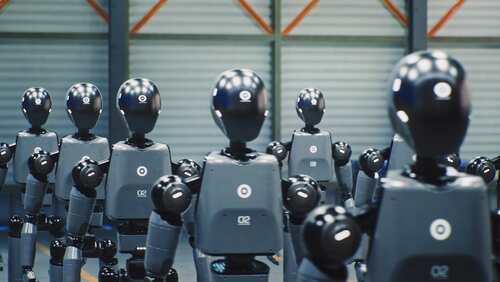
China just staged the most-watched propaganda display of technological dominance in history, broadcasting humanoid robots performing martial arts and dances to billions of viewers while American companies scramble to catch up.
Story Snapshot
- China’s 2026 Spring Festival Gala showcased multiple domestic humanoid robots on the world’s most-watched television program, reaching 23 billion views
- Unitree G1 robots and competing models experienced immediate order backlogs following the broadcast, with delivery dates pushed back months due to surging demand
- Chinese robotics companies now hold a commanding lead over Tesla’s Optimus, which won’t reach market until 2027
- The coordinated demonstration across multiple cities served as a strategic showcase for China’s five-year plan designating robotics as a major economic growth engine
China’s State-Sponsored Robotics Showcase Dominates Global Attention
China’s government orchestrated a stunning display of humanoid robot technology during the February 16, 2026 Spring Festival Gala broadcast on state-controlled CCTV network. The primetime event featured Unitree Robotics, AgiBot, NOETIX, LimX Dynamics, XPENG, and Booster Robotics performing synchronized martial arts demonstrations and traditional dances. The broadcast reached 23 billion views, dwarfing any Western media event and serving as a calculated demonstration of China’s technological advancement during the inaugural year of its latest five-year economic plan prioritizing robotics development.
American Companies Trail Behind as Chinese Robots Hit Consumer Market
Unitree Robotics’ G1 model, priced between twelve thousand and sixteen thousand dollars depending on configuration, experienced such overwhelming demand that delivery dates were pushed to early March. NOETIX Robotics’ affordable Bumi robot at fourteen hundred fifty dollars saw delivery dates extended to late April on retailer JD.com. Meanwhile, Tesla’s Elon Musk announced at Davos that his company’s Optimus robot won’t reach market until sometime in 2027, leaving American manufacturers more than a year behind Chinese competitors who already have functioning products generating consumer demand and revenue.
Government-Backed Industrial Strategy Yields Measurable Results
The robotics showcase represents successful execution of China’s centrally-planned economic strategy designating humanoid robots as a priority growth sector. Multiple companies participated in coordinated performances across Shenzhen, Hangzhou, Beijing, and Guangzhou during Lunar New Year celebrations, demonstrating ecosystem maturity beyond single-company capabilities. Unitree Robotics progressed toward its Shanghai Star market initial public offering, while XPENG plans to scale production of its Iron humanoid robot by year’s end. This coordinated advancement across multiple manufacturers signals significant government support and strategic resource allocation.
Practical Applications Remain Limited Despite Marketing Success
Despite generating viral interest and commercial demand, current humanoid robot capabilities remain confined to controlled environments and entertainment purposes. Industry observers note the performances constitute “flashy tech demos” rather than autonomous, general-purpose systems ready for widespread deployment. Wang Shing Shing, Unitree Robotics founder, acknowledged to CCTV that transformative applications depend on future breakthroughs in embodied artificial intelligence models that can operate at scale. Current deployments include assembly tasks in factory settings, border security stations, and railway guidance roles, but consumer applications beyond novelty remain unclear.
Watch: Humanoid Robots In China Put On Jaw-Dropping Show https://t.co/6OedxkcTiB
— zerohedge (@zerohedge) February 19, 2026
The fundamental question facing American manufacturers centers on whether Chinese companies will establish dominant market share before Western competitors develop comparable capabilities. China’s government provides strategic advantages through state media platform access, five-year planning priorities, and coordinated industrial policy that American companies cannot match. The robotics sector may experience exponential growth if embodied AI breakthroughs materialize, potentially creating an economic opportunity one hundred to one thousand times larger than current market size. American innovation and free-market competition historically overcome centrally-planned advantages, but the current gap demands serious attention from policymakers concerned about technological leadership and economic competitiveness.