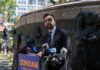


Federal prosecutors say a California man urged an armed mob to storm an Immigration and Customs Enforcement detention center and “overthrow” the government—and they arrested him before anyone got hurt.
Story Highlights
- Federal agents arrested Leonard Michael Fierro on a charge of interstate threats.
- Prosecutors say he used social media to call for an armed attack on the Adelanto ICE Processing Center.
- Officials allege he urged people to “take up arms” and free detainees while overthrowing the government.
- The case tests how online posts cross the line from speech to a “true threat” under federal law.
Federal Charge Tied to Calls for Armed Attack on ICE Facility
United States prosecutors charged Leonard Michael Fierro, 37, of Hacienda Heights, with one count of interstate threats, following his arrest late last week. Officials allege Fierro used social media to recruit people to form an armed mob to storm the Adelanto Immigration and Customs Enforcement Processing Center in California. Prosecutors say those calls included freeing detainees and urging a violent overthrow of the United States government, language they describe as explicit and dangerous. Fierro is expected to appear in federal court.
According to press statements and court filings, agents tied the alleged threats to public posts that called for people to “take up arms” on a specific date and target immigration officers and facilities. Authorities say the posts named the Adelanto site, which houses detainees awaiting immigration proceedings, as a focus of the action. The United States Attorney’s Office for the Central District of California said interstate communications conveying threats can violate federal law even when shared online.
What the Law Says About Online Threats and “True Threats”
Federal law has long banned transmitting threats in interstate commerce, including by using the internet and social media platforms. The Supreme Court has held that “true threats” are not protected by the First Amendment, which means speech that seriously expresses an intent to commit unlawful violence can be criminal. Recent cases also require proof that the speaker had some understanding of the threatening nature of the statements, which guides prosecutors in charging decisions today. That standard shapes how this case will be prosecuted in court.
Prosecutors in California say Fierro’s online statements met that threshold because they urged an armed mob to attack a named federal site and free detainees. The complaint relies on the content, the targets, and the call to recruit others to carry out violence, which officials say shows more than heated talk. Such cases often look at timing, location, and whether the posts tried to spark coordinated action. The line between speech and threat is narrow, but the law gives clear tools when violence is urged.
Public Safety, ICE Officers, and Detention Security
Immigration and Customs Enforcement officers face growing risks when activists or agitators target detention centers. Federal officials said the Adelanto facility was named directly, which elevates concern for officers and detainees on site. The alleged calls to breach a secure facility and free detainees do not challenge only one agency. They cut at the rule of law and public safety. Protecting federal officers and the community requires early action when threats move from anger to plans for violence.
Threats of violence against ICE agents must stop.
Leonard Michael Fierro, 37, of Hacienda Heights, is under arrest for using social media to threaten violence against ICE agents and facilities.
In one post he stated:
“Let’s get an armed mob together, break out all the… pic.twitter.com/5UGzCPtkmz
— F.A. United States Attorney Bill Essayli (@USAttyEssayli) November 23, 2026
Conservative readers know that chaos at detention centers would spill into nearby neighborhoods and strain local police. Prosecutors argue that stopping such threats before a mob gathers prevents bloodshed and protects due process for detainees. The Trump administration has stressed law and order and support for frontline agents. This arrest shows a firm response to anyone who threatens officers or tries to tear down the system by force. Courts will now weigh the posts under settled “true threat” rules.
Sources:
twitchy.com, justice.gov, x.com, conservativedirect.com, ocregister.com, community.lawschool.cornell.edu