
Police ringed Poland’s top court as its leadership was suspended, and the president called it a forcible takeover.
Story Snapshot
- The Constitutional Tribunal announced its top two leaders were suspended, naming a judge to take charge.
- Police controlled access as protesters surged the fence; detentions followed amid clashes.
- President Karol Nawrocki rushed home and said a constitutional body was seized by force.
- Prime Minister Donald Tusk said the moves restore rule of law after years of abuse.
What actually happened at the court
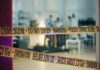
The Constitutional Tribunal posted that its president, Bogdan Święczkowski, and vice president, Bartłomiej Sochański, were suspended. The notice said Judge Anna Korwin-Piotrowska took over leadership. The announcement appeared online around early evening local time. News crews and protesters converged on the court. Police secured the grounds. Officers faced thrown objects after a fence was breached, and they detained three people. The scene mixed legal paperwork with riot shields and chants on cold pavement.
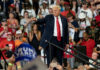
President Karol Nawrocki turned his plane around mid-trip and went straight to the court. He told the crowd the night brought a breach of public order and a forcible takeover of a constitutional body. He framed the dispute as more than a personnel spat. He cast it as a test of who runs Poland’s Constitution—the elected cabinet or the courts acting under law. Reporters on site counted several hundred protesters as he spoke into the noise of sirens and drums.
Why the legality is unsettled
The key dispute is not whether a suspension was posted—it was—but whether the move had lawful grounds. Reports say the legality of dismissing Święczkowski remains in question, with both sides claiming the Constitution. Supporters of the change argue the Tribunal had been tainted by past politics and needed a reset. Critics call the action a power grab dressed as reform. No final court ruling settles this clash yet, which keeps the standoff hot and the facts contested.
The prime minister’s side offers a clear story line: restore rule of law after years of alleged abuse. Donald Tusk has said the state must use available methods to fix institutions and restaff the Tribunal with lawfully appointed judges. He argues decisive action is needed to end paralysis and return constitutional order. That framing paints police as guardians, not enforcers for a takeover. It is a strong claim of purpose, not a signed legal opinion tied to this specific suspension order.
What we know—and what we do not
We know the Tribunal’s website carried the suspensions and named Korwin-Piotrowska as acting leader. We know police controlled access to the building while people protested, some clashing with officers. We know the president treated this as an emergency and used the words “forcible takeover.” We do not have public proof that Tusk personally ordered the suspensions or the police plan that night. The chain of command remains opaque in open sources.
ANALYSIS:🧐🇵🇱Poland’s government has just taken over the country’s highest court in what amounts to a coup; here's how it all started.
The Night They Laid Hands on the President
Before one in the morning in Warsaw, the President of the Republic of Poland stood at the door of his…— Sergeant News Network 🇺🇲 (@sgtnewsnetwork) November 1, 2026
The court’s own legitimacy war clouds everything. The Tribunal became a battlefield years ago. Each camp claims the other stacked it with partisan judges. That history explains the split reactions. One side sees a coup against the Constitution. The other sees overdue repairs. American conservatives will recognize the core concern: if those who write the rules also referee the game, self-government bends toward whoever holds the whistle—no matter the jersey color.
How to judge the “takeover” claim on common-sense grounds
Common sense asks three things. Who had clear legal authority to suspend the leaders that day? Who gave the police orders to control entry, and on what written basis? Which tribunal or court, not caught in the same feud, can judge the dispute? The first answer needs the full suspension order with citations to law. The second needs police operations logs. The third needs a forum both sides accept. Until then, labels like “coup” or “reform” are arguments, not verdicts.
One fact should focus minds. When a court changes hands during a police lockdown, public trust takes a hit. Even if the government’s aims are lawful, process matters. A clean process has notices, transparent orders, and minimal force. A messy process has surprise postings, blocked doors, and baton lines. The scene in Warsaw looked messy. That does not prove it was illegal. It does show the cost of acting first and explaining later, a bill paid in public confidence.
What comes next
Poland needs daylight, not drama. Publish the full suspension order. Release command logs that justify the police posture. Set a timeline for a neutral review. If the government can prove lawful grounds, it strengthens its case to restore the rule of law. If it cannot, it should reverse course and reopen the question through proper legislative channels. Either way, the Constitution wins only when force bows to law, and when law is written where everyone can read it.
Sources:
en.wikipedia.org, x.com, econotimes.com, reuters.com