
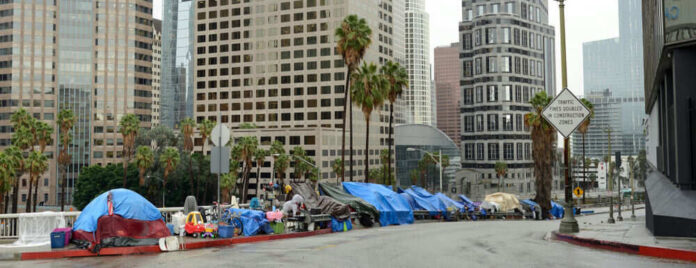
Two minutes is all it took for Los Angeles’s homelessness power struggle to explode into a stalemate with millions of dollars and thousands of lives hanging in the balance.
Story Snapshot
- A takeover bid to shift key duties from LAHSA to Los Angeles County ended with no vote.
- Los Angeles Homeless Services Authority is a city-county joint powers agency central to federal grants.
- Mayor Karen Bass and city allies pushed to keep a direct city role in placements and programs.
- Federal officials questioned LAHSA’s controls; LAHSA sued, saying the suspension lacked solid evidence.
Two minutes, no decision, and a very public mess
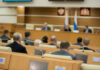
Los Angeles leaders walked into an October 9, 2026 meeting to decide who runs the region’s homelessness machine. They walked out two minutes later with no vote and a bigger fight. The County sought to pull core duties from the Los Angeles Homeless Services Authority. City leaders objected. The result was an abrupt halt that settled nothing but confirmed how strained the system has become.
Mayor Karen Bass, Council President Marqueece Harris-Dawson, and several council members argued that the city must keep a say in programs it helps fund. They focused on housing placements and data control. They see risk in giving the County sole power over who gets housed and where. That argument resonates with taxpayers who expect leverage to follow dollars. Yet it also invites a hard question: what exactly changes on the ground if governance stays split?
What LAHSA is and why it matters
The Los Angeles Homeless Services Authority did not appear from thin air or a think tank memo. It was created in 1993 as a joint powers authority by the City and County. It became the region’s point agency for the federal homelessness program known as the Continuum of Care. That role means coordinating federal, state, county, and city funds, and running core systems like data and placements across more than 100 providers. Fragment the agency, and federal eligibility can get complicated fast.
The tension spiked when the United States Department of Housing and Urban Development questioned LAHSA’s financial controls and suspended funding access. LAHSA sued the federal government, arguing the notice did not name specific grant violations and leaned on a mash-up of news clips, stray quotes, and routine audit notes. That lawsuit is an assertion, not a judgment, but it shows how much money and credibility sit at risk in this fight.
The County’s case: centralize power to fix broken pipes
County supervisors say this is not a turf war; it is an audit problem. They cite years of weak contract oversight, late or inaccurate financial statements, and contractor payment delays at LAHSA. They argue centralizing functions under the Board of Supervisors will speed results, clean up bookkeeping, and put one elected body on the hook for outcomes. They already created a Department of Homeless Services and Housing and pulled more than $300 million from LAHSA to run services directly.
Independent reporting adds numbers that grab attention. LAHSA underspent its budget by about $108 million in the fiscal year ending June 2025, blamed on program delays. An audit found “significant” inaccuracies in its financial statements that required late adjustments. Those facts do not prove a County takeover will solve homelessness. They do show why voters demand simpler lines of authority and real-time accounting for every dollar.
The city’s case: keep leverage where the money and people are
City leaders argue that a pure County takeover risks sidelining the jurisdiction with the most concentrated street crisis and large direct investments. They want shared oversight to protect city-funded placements and data access, and to keep coordination with city housing pipelines intact. They point to LAHSA’s legal design as a city-county joint body tied to federal rules. Blow that up in haste, and the region could fumble grant eligibility and slow housing even more.
That case has a hole. The City has not produced a public, detailed model that shows how shared control would fix LAHSA’s past failures. No clear performance targets, audit gates, payment timelines, or enforcement triggers have been put in front of the public. Without that, “shared oversight” sounds like more process on top of too much process. Conservatives will point out that split accountability often means no accountability at all.
What must happen next to earn trust
Leaders need a one-page scoreboard that the public can check monthly: placements, time from referral to keys, clean audits, on-time payments, and spending versus budget. The County should publish contract payment clocks and error rates. The City should define exactly which placement and data decisions it funds and how they perform. LAHSA should release corrective actions tied to independent verification. If any party refuses, that tells voters everything they need to know.
The two-minute implosion was not a failure of manners. It was a warning about a system that spends vast sums yet cannot settle who is in charge. Pick a structure and bind it to measurable results with real consequences. If centralization wins, demand faster service and cleaner books within months, not years. If shared governance survives, bolt it to strict controls and a transparent clock. Either way, stop the drift. People on the street cannot wait.
Sources:
nypost.com, mynewsla.com, latimes.com, ktla.com, laist.com, lindseyhorvath.lacounty.gov