

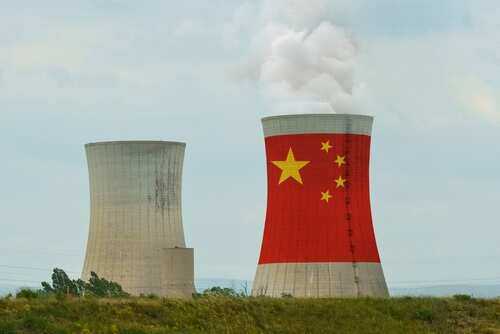
China’s latest experiment threatens to escalate global nuclear tensions, challenging international peace and security.
Story Highlights
- Chinese scientists conducted the first-ever lab simulation of a triple nuclear strike.
- The experiment raises concerns over potential military escalation and nuclear strategy shifts.
- Findings suggest significant amplification of destructive power from multi-warhead strikes.
- International observers worry about increased risk of arms races and nuclear proliferation.
Chinese Scientists Test Triple Nuclear Strike
In a groundbreaking yet alarming development, Chinese scientists have successfully simulated a triple nuclear strike in a laboratory setting. Led by Xu Xiaohui at the PLA Army Engineering University in Nanjing, the team detonated three scaled-down nuclear warheads in rapid succession. This experiment marks the first of its kind, aiming to study the amplified destructive effects of coordinated nuclear strikes, particularly against hardened underground targets.
Unlike previous studies that focused on single warhead impacts, this simulation utilized similitude theory and advanced vacuum chamber systems. The research revealed that multi-warhead strikes could dramatically increase destruction compared to a single blast, raising questions about future military strategies and the potential for new nuclear doctrines. The experiment was reported in the September 2025 issue of the journal *Explosion and Shock Waves*.
Global Implications and Concerns
The international community and defense experts are expressing significant concerns following the revelation of China’s nuclear capabilities. The ability to quadruple damage areas and enhance cratering efficiency poses a potential shift in military doctrines, prompting fears of an accelerated arms race. There is growing pressure on other nuclear powers to develop similar capabilities, which could destabilize global security and increase strategic instability.
Moreover, the lack of official statements from the Chinese military or government on operational deployment keeps the world on edge. International observers and non-proliferation advocates are calling for urgent dialogue and arms control measures to prevent an escalation in nuclear capabilities and avert potential conflicts.
Nuclear Strategy: A Shift on the Horizon?
The results of the experiment may have far-reaching effects on military strategy, potentially leading to a paradigm shift toward precision multi-warhead nuclear strikes. While the scientific community praises the technical achievements, the ethical and strategic risks of pursuing more destructive nuclear options cannot be ignored. The experiment’s significance lies not only in its scientific advancements but also in the broader implications for global peace and security.
Chinese Scientists Simulate First ‘Triple-Nuke-Strike’ in Lab https://t.co/NUyBeL4PAt via @nextgen_defense
— Geoff Stooke (@GeoffStooke) October 1, 2025
As the world grapples with the possibilities introduced by this experiment, it remains crucial for leaders to engage in proactive diplomacy and strengthen non-proliferation efforts. The future of international security may well depend on how nations respond to these developments and manage the evolving landscape of nuclear capabilities.
Sources:
Chinese Scientists Simulate First ‘Triple-Nuke-Strike’ in Lab
Chinese Army Engineers Conduct First Simultaneous Nuke Strike Experiment
Chinese Army Engineers Run First Triple Nuke Strike Experiment