
After more than 4,000 arrests in a single state, Tom Homan’s message to illegal immigrants was simple: the Minnesota drawdown isn’t a retreat—it’s a warning.
Story Snapshot
- White House Border Czar Tom Homan announced the wind-down of “Operation Metro Surge” in Minnesota on Feb. 12, 2026, after it began Dec. 1, 2025.
- Federal authorities say the operation led to more than 4,000 arrests of undocumented immigrants, including people identified as public-safety threats.
- The surge ended amid escalating protests and reports of two protester deaths, adding political and public-safety pressure around the federal presence.
- Homan said enforcement will continue through jail cooperation and redeployed teams, while warning that immigration laws still apply nationwide.
What the Minnesota drawdown actually means
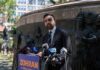
Tom Homan used a Feb. 12, 2026, news conference in Minneapolis to announce a “significant drawdown” of Operation Metro Surge, the federal immigration enforcement push launched Dec. 1, 2025. The Trump White House framed the shift as a transition, not a reversal: agents would be pulled back from a heavy footprint on the streets while smaller federal teams remain temporarily to handle security and rapid-response needs during the handoff.
Homan’s central point was that the administration is moving from a high-visibility surge to a model that still produces arrests—especially when local and state partners provide jail access and release notifications. That distinction matters because it changes the optics while keeping the mechanics of enforcement intact. A reduced street presence can lower day-to-day friction, but cooperation at the jail level can still make removals faster and more routine.
Why the operation became a flashpoint in Minneapolis
Operation Metro Surge unfolded in a politically charged environment: Minneapolis is widely known as a progressive stronghold, and Minnesota has faced repeated conflict with federal immigration authorities over limits on detainers and jail access. Reporting on the surge described escalating protests and two protester deaths, including Renee Good, which intensified scrutiny of how enforcement was being carried out and how state and local leaders responded as tensions rose in early February.
The operation also drew legal and political heat. In January 2026, the Department of Justice issued subpoenas to Minnesota Gov. Tim Walz, Minneapolis Mayor Jacob Frey, and Attorney General Keith Ellison as part of probes into the state’s response to federal enforcement. Those subpoenas, combined with street demonstrations and violence, set the stage for a drawdown that the White House could present as “stabilizing” while insisting the federal government still controls immigration enforcement.
Homan’s enforcement pivot: fewer street teams, more leverage
Homan argued the surge produced results and claimed Minnesota became “less of a sanctuary state” as cooperation increased in the weeks before the announcement. He pointed to “productive conversations” that, according to reporting, led to better access to jails and improved coordination on releases. That is a familiar pressure point in immigration enforcement: when jails notify ICE, federal agents can prioritize custody transfers without conducting broad neighborhood raids.
What “We’re coming for you” signals under Title 8 enforcement
Homan’s warning—that undocumented individuals are “not exempt” from immigration laws—was paired with a broader promise to redirect personnel to other priorities, including mass deportation efforts. Reporting described this as a pivot to nationwide “Title 8” enforcement, which is the standard immigration-law framework used for removals. The practical implication is that even as one high-profile surge ends, the administration can redeploy experienced agents elsewhere and keep steady pressure on jurisdictions that resist cooperation.
'We're Coming for You': Tom Homan Issues Warning on Heels of Minnesota Pullout https://t.co/y5aXLR2dtB
— Mediaite (@Mediaite) February 13, 2026
Minneapolis leadership publicly framed the drawdown as a victory against an “occupation,” with Mayor Frey posting on X that the city “stood with our neighbors” and calling that stance “deeply American,” according to Politico’s reporting. The competing narratives are straightforward: the Trump administration points to arrests and public-safety targeting, while local Democrats highlight community disruption and the risks of aggressive federal tactics. What is not disputed in the core reporting is the scale—thousands arrested—and the administration’s insistence that the end of the surge is not the end of enforcement.
Sources:
Homan announces end to Minnesota immigration enforcement surge
Tom Homan federal immigration operation Minnesota news conference